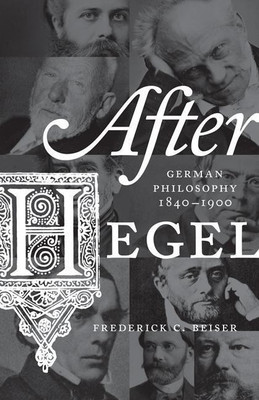
After Hegel(English, Paperback, Beiser Frederick C.)
- Beiser Frederick C.
Paperback & Hardcover deals ―
Amazon IndiaGOFlipkart ₹ 2941SnapdealGOSapnaOnlineGOJain Book AgencyGOBooks Wagon₹540Book ChorGOCrosswordGODC BooksGOe-book & Audiobook deals ―
Amazon India GOGoogle Play Books GOAudible GO* Price may vary from time to time.
* GO = We're not able to fetch the price (please check manually visiting the website).
Know about the book -
After Hegel(English, Paperback, Beiser Frederick C.) is written by Beiser Frederick C. and published by Princeton University Press. It's available with International Standard Book Number or ISBN identification 0691173710 (ISBN 10) and 9780691173719 (ISBN 13).
Histories of German philosophy in the nineteenth century typically focus on its first half--when Hegel, idealism, and Romanticism dominated. By contrast, the remainder of the century, after Hegel's death, has been relatively neglected because it has been seen as a period of stagnation and decline. But Frederick Beiser argues that the second half of the century was in fact one of the most revolutionary periods in modern philosophy because the nature of philosophy itself was up for grabs and the very absence of certainty led to creativity and the start of a new era. In this innovative concise history of German philosophy from 1840 to 1900, Beiser focuses not on themes or individual thinkers but rather on the period's five great debates: the identity crisis of philosophy, the materialism controversy, the methods and limits of history, the pessimism controversy, and the Ignorabimusstreit.Schopenhauer and Wilhelm Dilthey play important roles in these controversies but so do many neglected figures, including Ludwig Buchner, Eugen Duhring, Eduard von Hartmann, Julius Fraunstaedt, Hermann Lotze, Adolf Trendelenburg, and two women, Agnes Taubert and Olga Pluemacher, who have been completely forgotten in histories of philosophy. The result is a wide-ranging, original, and surprising new account of German philosophy in the critical period between Hegel and the twentieth century.
