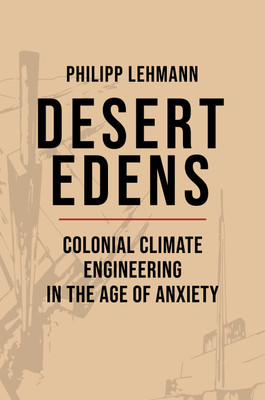
Desert Edens(English, Hardcover, Lehmann Philipp)
- Lehmann Philipp
Paperback & Hardcover deals ―
Amazon IndiaGOFlipkart ₹ 5477SnapdealGOSapnaOnlineGOJain Book AgencyGOBooks Wagon₹747Book ChorGOCrosswordGODC BooksGOe-book & Audiobook deals ―
Amazon India GOGoogle Play Books GOAudible GO* Price may vary from time to time.
* GO = We're not able to fetch the price (please check manually visiting the website).
Know about the book -
Desert Edens(English, Hardcover, Lehmann Philipp) is written by Lehmann Philipp and published by Princeton University Press. It's available with International Standard Book Number or ISBN identification 0691168865 (ISBN 10) and 9780691168869 (ISBN 13).
How technological advances and colonial fears inspired utopian geoengineering projects during the late nineteenth and early twentieth centuries From the 1870s to the mid-twentieth century, European explorers, climatologists, colonial officials, and planners were avidly interested in large-scale projects that might actively alter the climate. Uncovering this history, Desert Edens looks at how arid environments and an increasing anxiety about climate in the colonial world shaped this upsurge in ideas about climate engineering. From notions about the transformation of deserts into forests to Nazi plans to influence the climates of war-torn areas, Philipp Lehmann puts the early climate change debate in its environmental, intellectual, and political context, and considers the ways this legacy reverberates in the present climate crisis. Lehmann examines some of the most ambitious climate-engineering projects to emerge in the late nineteenth and early twentieth centuries. Confronted with the Sahara in the 1870s, the French developed concepts for a flooding project that would lead to the creation of a man-made Sahara Sea. In the 1920s, German architect Herman Soergel proposed damming the Mediterranean in order to geoengineer an Afro-European continent called "Atlantropa," which would fit the needs of European settlers. Nazi designs were formulated to counteract the desertification of Eastern Europe and Central Asia. Despite ideological and technical differences, these projects all incorporated and developed climate change theories and vocabulary. They also combined expressions of an extreme environmental pessimism with a powerful technological optimism that continue to shape the contemporary moment. Focusing on the intellectual roots, intended effects, and impact of early measures to modify the climate, Desert Edens investigates how the technological imagination can be inspired by pressing fears about the environment and civilization.
