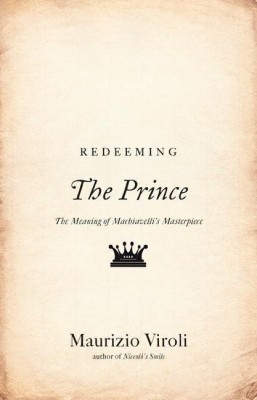
Redeeming The Prince(English, Paperback, Viroli Maurizio)
- Viroli Maurizio
Paperback & Hardcover deals ―
Amazon IndiaGOFlipkart ₹ 2932SnapdealGOSapnaOnlineGOJain Book AgencyGOBooks Wagon₹495Book ChorGOCrosswordGODC BooksGOe-book & Audiobook deals ―
Amazon India GOGoogle Play Books GOAudible GO* Price may vary from time to time.
* GO = We're not able to fetch the price (please check manually visiting the website).
Know about the book -
Redeeming The Prince(English, Paperback, Viroli Maurizio) is written by Viroli Maurizio and published by Princeton University Press. It's available with International Standard Book Number or ISBN identification 0691168598 (ISBN 10) and 9780691168593 (ISBN 13).
In Redeeming "The Prince," one of the world's leading Machiavelli scholars puts forth a startling new interpretation of arguably the most influential but widely misunderstood book in the Western political tradition. Overturning popular misconceptions and challenging scholarly consensus, Maurizio Viroli also provides a fresh introduction to the work. Seen from this original perspective, five centuries after its composition, The Prince offers new insights into the nature and possibilities of political liberation. Rather than a bible of unscrupulous politics, The Prince, Viroli argues, is actually about political redemption--a book motivated by Machiavelli's patriotic desire to see a new founding for Italy. Written in the form of an oration, following the rules of classical rhetoric, the book condenses its main message in the final section, "Exhortation to liberate Italy from the Barbarians." There Machiavelli creates the myth of a redeemer, an ideal ruler who ushers in an era of peace, freedom, and unity.Contrary to scholars who maintain that the exhortation was added later, Viroli proves that Machiavelli composed it along with the rest of the text, completing the whole by December 1513 or early 1514. Only if we read The Prince as a theory of political redemption, Viroli contends, can we at last understand, and properly evaluate, the book's most controversial pages on political morality, as well as put to rest the cliche of Machiavelli as a "Machiavellian." Bold, clear, and provocative, Redeeming "The Prince" should permanently change how Machiavelli and his masterpiece are understood.
