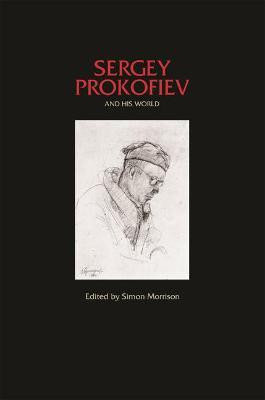
Sergey Prokofiev and His World(English, Paperback, unknown)
- unknown
Paperback & Hardcover deals ―
Amazon IndiaGOFlipkart ₹ 5744SnapdealGOSapnaOnlineGOJain Book AgencyGOBooks Wagon₹689Book ChorGOCrosswordGODC BooksGOe-book & Audiobook deals ―
Amazon India GOGoogle Play Books GOAudible GO* Price may vary from time to time.
* GO = We're not able to fetch the price (please check manually visiting the website).
Know about the book -
Sergey Prokofiev and His World(English, Paperback, unknown) is written by unknown and published by Princeton University Press. It's available with International Standard Book Number or ISBN identification 0691138958 (ISBN 10) and 9780691138954 (ISBN 13).
Sergey Prokofiev (1891-1953), arguably the most popular composer of the twentieth century, led a life of triumph and tragedy. The story of his prodigious childhood in tsarist Russia, maturation in the West, and rise and fall as a Stalinist-era composer is filled with unresolved questions. Sergey Prokofiev and His World probes beneath the surface of his career and contextualizes his contributions to music on both sides of the nascent Cold War divide. The book contains previously unknown documents from the Russian State Archive of Literature and Art in Moscow and the Prokofiev Estate in Paris. The literary notebook of the composer's mother, Mariya Grigoryevna, illuminates her involvement in his education and is translated in full, as are ninety-eight letters between the composer and his business partner, Levon Atovmyan. The collection also includes a translation of Sigizmund Krzhizhanovsky's unperformed stage adaptation of Eugene Onegin, for which Prokofiev composed incidental music in 1936. The essays in the book range in focus from musical sketches to Kremlin decrees.The contributors explore Prokofiev's time in America; evaluate his working methods in the mid-1930s; document the creation of his score for the film Lieutenant Kizhe; tackle how and why Prokofiev rewrote his 1930 Fourth Symphony in 1947; detail his immortalization by Soviet bureaucrats, composers, and scholars; and examine Prokofiev's interest in Christian Science and the paths it opened for his music. The contributors are Mark Aranovsky, Kevin Bartig, Elizabeth Bergman, Leon Botstein, Pamela Davidson, Caryl Emerson, Marina Frolova-Walker, Nelly Kravetz, Leonid Maximenkov, Stephen Press, and Peter Schmelz.
