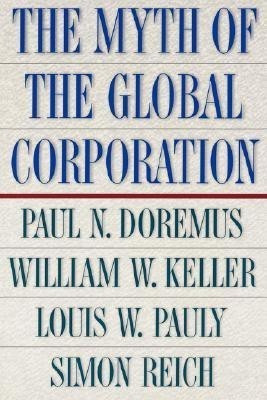
The Myth of the Global Corporation(English, Paperback, Doremus Paul)
- Doremus Paul
Paperback & Hardcover deals ―
Amazon IndiaGOFlipkart ₹ 5889SnapdealGOSapnaOnlineGOJain Book AgencyGOBooks Wagon₹279Book ChorGOCrosswordGODC BooksGOe-book & Audiobook deals ―
Amazon India GOGoogle Play Books GOAudible GO* Price may vary from time to time.
* GO = We're not able to fetch the price (please check manually visiting the website).
Know about the book -
The Myth of the Global Corporation(English, Paperback, Doremus Paul) is written by Doremus Paul and published by Princeton University Press. It's available with International Standard Book Number or ISBN identification 0691010072 (ISBN 10) and 9780691010076 (ISBN 13).
Critics and defenders of multinational corporations often agree on at least one thing: that the activities of multinationals are creating an overwhelmingly powerful global market that is quickly rendering national borders obsolete. The authors of this book, however, argue that such expectations commonly rest on a myth. They examine key activities of multinational corporations in the United States, Japan, and Europe and explore the relationship between corporate behavior and national institutions and cultures. They demonstrate that the world's leading multinationals continue to be shaped decisively by the policies and values of their home countries and that their core operations are not converging to create a seamless global market. With a wealth of fresh evidence, the authors show that Japanese and German multinationals, in particular, remain only weakly committed to laissez-faire policy orientations and continue to exhibit strong allegiance to national goals in such areas as investment and employment. They also bring to light the consequences of enduring differences in government policies on, for example, industrial cartels, capital markets, and research and development.The authors agree that the world economy is becoming more complex and integrated as overt barriers to trade and investment fall away. But they conclude that the extent of this integration is decisively limited by structural divergence at the level of the firm. The book will be essential reading for those seeking to understand the growing interdependence of still-distinctive industrial societies and the wellsprings of the true global economy.
