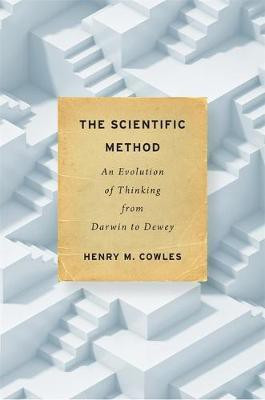
The Scientific Method(English, Hardcover, Cowles Henry M.)
- Cowles Henry M.
Paperback & Hardcover deals ―
Amazon IndiaGOFlipkart ₹ 5618SnapdealGOSapnaOnlineGOJain Book AgencyGOBooks Wagon₹239Book ChorGOCrosswordGODC BooksGOe-book & Audiobook deals ―
Amazon India GOGoogle Play Books GOAudible GO* Price may vary from time to time.
* GO = We're not able to fetch the price (please check manually visiting the website).
Know about the book -
The Scientific Method(English, Hardcover, Cowles Henry M.) is written by Cowles Henry M. and published by Harvard University Press. It's available with International Standard Book Number or ISBN identification 0674976193 (ISBN 10) and 9780674976191 (ISBN 13).
The surprising history of the scientific method-from an evolutionary account of thinking to a simple set of steps-and the rise of psychology in the nineteenth century. The idea of a single scientific method, shared across specialties and teachable to ten-year-olds, is just over a hundred years old. For centuries prior, science had meant a kind of knowledge, made from facts gathered through direct observation or deduced from first principles. But during the nineteenth century, science came to mean something else: a way of thinking. The Scientific Method tells the story of how this approach took hold in laboratories, the field, and eventually classrooms, where science was once taught as a natural process. Henry M. Cowles reveals the intertwined histories of evolution and experiment, from Charles Darwin's theory of natural selection to John Dewey's vision for science education. Darwin portrayed nature as akin to a man of science, experimenting through evolution, while his followers turned his theory onto the mind itself. Psychologists reimagined the scientific method as a problem-solving adaptation, a basic feature of cognition that had helped humans prosper. This was how Dewey and other educators taught science at the turn of the twentieth century-but their organic account was not to last. Soon, the scientific method was reimagined as a means of controlling nature, not a product of it. By shedding its roots in evolutionary theory, the scientific method came to seem far less natural, but far more powerful. This book reveals the origin of a fundamental modern concept. Once seen as a natural adaptation, the method soon became a symbol of science's power over nature, a power that, until recently, has rarely been called into question.
