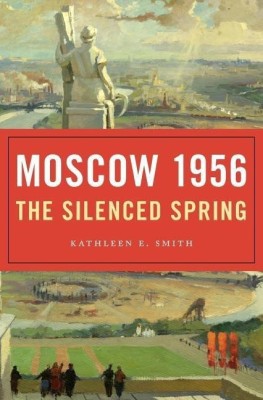
Moscow 1956(English, Hardcover, Smith Kathleen E.)
- Smith Kathleen E.
Paperback & Hardcover deals ―
Amazon IndiaGOFlipkart ₹ 3924SnapdealGOSapnaOnlineGOJain Book AgencyGOBooks Wagon₹425Book ChorGOCrosswordGODC BooksGOe-book & Audiobook deals ―
Amazon India GOGoogle Play Books GOAudible GO* Price may vary from time to time.
* GO = We're not able to fetch the price (please check manually visiting the website).
Know about the book -
Moscow 1956(English, Hardcover, Smith Kathleen E.) is written by Smith Kathleen E. and published by Harvard University Press. It's available with International Standard Book Number or ISBN identification 0674972007 (ISBN 10) and 9780674972001 (ISBN 13).
Joseph Stalin had been dead for three years when his successor, Nikita Khrushchev, stunned a closed gathering of Communist officials with a litany of his predecessor's abuses. Meant to clear the way for reform from above, Khrushchev's "Secret Speech" of February 25, 1956, shattered the myth of Stalin's infallibility. In a bid to rejuvenate the Party, Khrushchev had his report read out loud to members across the Soviet Union that spring. However, its message sparked popular demands for more information and greater freedom to debate. Moscow 1956: The Silenced Spring brings this first brief season of thaw into fresh focus. Drawing on newly declassified Russian archives, Kathleen Smith offers a month-by-month reconstruction of events as the official process of de-Stalinization unfolded and political and cultural experimentation flourished. Smith looks at writers, students, scientists, former gulag prisoners, and free-thinkers who took Khrushchev's promise of liberalization seriously, testing the limits of a more open Soviet system. But when anti-Stalin sentiment morphed into calls for democratic reform and eventually erupted in dissent within the Soviet bloc-notably in the Hungarian uprising-the Party balked and attacked critics. Yet Khrushchev had irreversibly opened his compatriots' eyes to the flaws of monopolistic rule. Citizens took the Secret Speech as inspiration and permission to opine on how to restore justice and build a better society, and the new crackdown only reinforced their discontent. The events of 1956 set in motion a cycle of reform and retrenchment that would recur until the Soviet Union's collapse in 1991.
