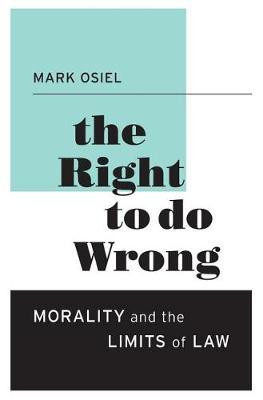
The Right to Do Wrong(English, Hardcover, Osiel Mark)
- Osiel Mark
Paperback & Hardcover deals ―
Amazon IndiaGOFlipkart ₹ 2980SnapdealGOSapnaOnlineGOJain Book AgencyGOBooks Wagon₹239Book ChorGOCrosswordGODC BooksGOe-book & Audiobook deals ―
Amazon India GOGoogle Play Books GOAudible GO* Price may vary from time to time.
* GO = We're not able to fetch the price (please check manually visiting the website).
Know about the book -
The Right to Do Wrong(English, Hardcover, Osiel Mark) is written by Osiel Mark and published by Harvard University Press. It's available with International Standard Book Number or ISBN identification 0674368258 (ISBN 10) and 9780674368255 (ISBN 13).
Common morality-in the form of shame, outrage, and stigma-has always been society's first line of defense against ethical transgressions. Social mores crucially complement the law, Mark Osiel shows, sparing us from oppressive formal regulation. Much of what we could do, we shouldn't-and we don't. We have a free-speech right to be offensive, but we know we will face outrage in response. We may declare bankruptcy, but not without stigma. Moral norms constantly demand more of us than the law requires, sustaining promises we can legally break and preventing disrespectful behavior the law allows. Mark Osiel takes up this curious interplay between lenient law and restrictive morality, showing that law permits much wrongdoing because we assume that rights are paired with informal but enforceable duties. People will exercise their rights responsibly or else face social shaming. For the most part, this system has worked. Social order persists despite ample opportunity for reprehensible conduct, testifying to the decisive constraints common morality imposes on the way we exercise our legal prerogatives. The Right to Do Wrong collects vivid case studies and social scientific research to explore how resistance to the exercise of rights picks up where law leaves off and shapes the legal system in turn. Building on recent evidence that declining social trust leads to increasing reliance on law, Osiel contends that as social changes produce stronger assertions of individual rights, it becomes more difficult to depend on informal tempering of our unfettered freedoms. Social norms can be indefensible, Osiel recognizes. But the alternative-more repressive law-is often far worse. This empirically informed study leaves little doubt that robust forms of common morality persist and are essential to the vitality of liberal societies.
