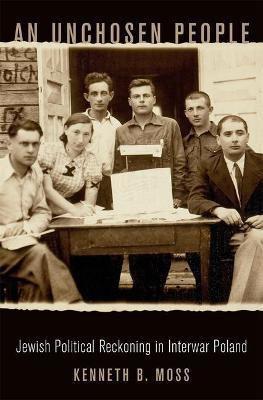
An Unchosen People(English, Hardcover, Moss Kenneth B.)
- Moss Kenneth B.
Paperback & Hardcover deals ―
Amazon IndiaGOFlipkart ₹ 6813SnapdealGOSapnaOnlineGOJain Book AgencyGOBooks Wagon₹3,175Book ChorGOCrosswordGODC BooksGOe-book & Audiobook deals ―
Amazon India GOGoogle Play Books GOAudible GO* Price may vary from time to time.
* GO = We're not able to fetch the price (please check manually visiting the website).
Know about the book -
An Unchosen People(English, Hardcover, Moss Kenneth B.) is written by Moss Kenneth B. and published by Harvard University Press. It's available with International Standard Book Number or ISBN identification 0674245105 (ISBN 10) and 9780674245105 (ISBN 13).
A revisionist account of interwar Europe's largest Jewish community that upends histories of Jewish agency to rediscover reckonings with nationalism's pathologies, diaspora's fragility, Zionism's promises, and the necessity of choice. What did the future hold for interwar Europe's largest Jewish community, the font of global Jewish hopes? When intrepid analysts asked these questions on the cusp of the 1930s, they discovered a Polish Jewry reckoning with "no tomorrow." Assailed by antisemitism and witnessing liberalism's collapse, some Polish Jews looked past progressive hopes or religious certainties to investigate what the nation-state was becoming, what powers minority communities really possessed, and where a future might be found-and for whom. The story of modern Jewry is often told as one of creativity and contestation. Kenneth B. Moss traces instead a late Jewish reckoning with diasporic vulnerability, nationalism's terrible potencies, Zionism's promises, and the necessity of choice. Moss examines the works of Polish Jewry's most searching thinkers as they confronted political irrationality, state crisis, and the limits of resistance. He reconstructs the desperate creativity of activists seeking to counter despair where they could not redress its causes. And he recovers a lost grassroots history of critical thought and political searching among ordinary Jews, young and powerless, as they struggled to find a viable future for themselves-in Palestine if not in Poland, individually if not communally. Focusing not on ideals but on a search for realism, Moss recasts the history of modern Jewish political thought. Where much scholarship seeks Jewish agency over a collective future, An Unchosen People recovers a darker tradition characterized by painful tradeoffs amid a harrowing political reality, making Polish Jewry a paradigmatic example of the minority experience endemic to the nation-state.
