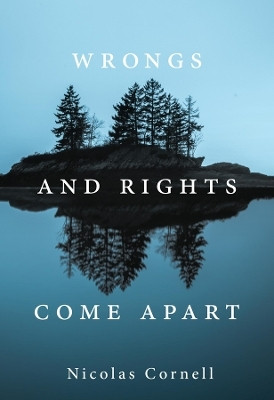
Wrongs and Rights Come Apart(English, Hardcover, Cornell Nicolas)
- Cornell Nicolas
Paperback & Hardcover deals ―
Amazon IndiaGOFlipkart ₹ 6970SnapdealGOSapnaOnlineGOJain Book AgencyGOBooks Wagon₹425Book ChorGOCrosswordGODC BooksGOe-book & Audiobook deals ―
Amazon India GOGoogle Play Books GOAudible GO* Price may vary from time to time.
* GO = We're not able to fetch the price (please check manually visiting the website).
Know about the book -
Wrongs and Rights Come Apart(English, Hardcover, Cornell Nicolas) is written by Cornell Nicolas and published by Harvard University Press. It's available with International Standard Book Number or ISBN identification 0674244974 (ISBN 10) and 9780674244979 (ISBN 13).
A bold challenge to a central assumption in modern moral and legal thinking, showing that wrongs and rights are not flip sides of the same coin but instead represent fundamentally distinct moral phenomena. It is commonplace to regard rights and wrongs as mirror images of each other: to be wronged, we think, is to have one's rights violated. According to this familiar picture of the moral landscape, there is an inescapable relationship between our claims on others and our complaints against them. Indeed, if to have a right means just that one can reasonably claim redress for being wronged, then there is really nothing separating wrongs and rights. Legal scholar and philosopher Nicolas Cornell rejects this view. He argues that although wrongs and rights often correspond and overlap, they diverge systematically in a range of contexts and play substantively different roles in our lives. Wrongs are not merely the outline left where rights have been taken away, and rights are more than just the glimmer of future liability. To make its case, Wrongs and Rights Come Apart engages a variety of examples from literature, legal cases, moral philosophy, and contemporary culture. In accessible, lively prose, Cornell explores topics such as illicit promises, forgiveness, animal rights, and economic exploitation. It turns out that potential wrongs-unlike rights-do not determine how we ought to conduct ourselves. And crucially, rights-unlike wrongs-do not tell us what corrective action is appropriate after a violation. Only by seeing rights and wrongs as distinct concepts, Cornell concludes, can we do justice to the richness of our interpersonal obligations.
