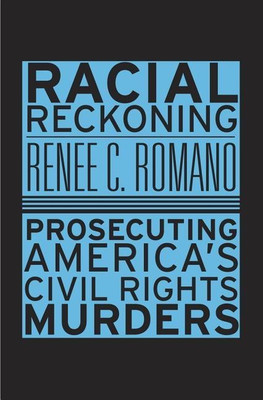
Racial Reckoning(English, Hardcover, Romano Renee C.)
- Romano Renee C.
Paperback & Hardcover deals ―
Amazon IndiaGOFlipkart ₹ 2797SnapdealGOSapnaOnlineGOJain Book AgencyGOBooks Wagon₹769Book ChorGOCrosswordGODC BooksGOe-book & Audiobook deals ―
Amazon India GOGoogle Play Books GOAudible GO* Price may vary from time to time.
* GO = We're not able to fetch the price (please check manually visiting the website).
Know about the book -
Racial Reckoning(English, Hardcover, Romano Renee C.) is written by Romano Renee C. and published by Harvard University Press. It's available with International Standard Book Number or ISBN identification 0674050428 (ISBN 10) and 9780674050426 (ISBN 13).
Few whites who violently resisted the civil rights struggle were charged with crimes in the 1950s and 1960s. But the tide of a long-deferred justice began to change in 1994, when a Mississippi jury convicted Byron De La Beckwith for the 1963 murder of Medgar Evers. Since then, more than one hundred murder cases have been reopened, resulting in more than a dozen trials. But how much did these public trials contribute to a public reckoning with America's racist past? Racial Reckoning investigates that question, along with the political pressures and cultural forces that compelled the legal system to revisit these decades-old crimes. Renee C. Romano brings readers into the courthouse for the trials of the civil rights era's most infamous killings, including the Birmingham church bombing and the triple murder of Andrew Goodman, James Chaney, and Mickey Schwerner. The activists who succeeded in reopening these cases hoped that bringing those responsible to justice would serve to highlight the state-sanctioned racism that had condoned the killings and the lingering effects of racial violence. Courtroom procedures, however, worked against a deeper exploration of the state's complicity in murder or a full accounting of racial injustices, past or present. Yet the media and a new generation of white southerners--a different breed from the dying Klansmen on trial--saw the convictions as proof of the politically rehabilitated South and stamped "case closed" on America's legacy of violent racism. Romano shows why addressing the nation's troubled racial past will require more than legal justice.
