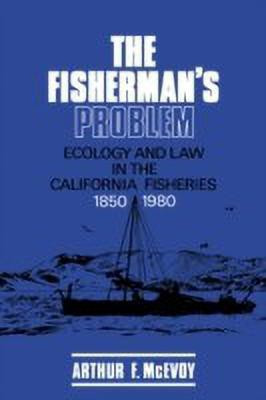
The Fisherman's Problem(English, Paperback, McEvoy Arthur F.)
- McEvoy Arthur F.
Paperback & Hardcover deals ―
Amazon IndiaGOFlipkart ₹ 2869SnapdealGOSapnaOnlineGOJain Book AgencyGOBooks Wagon₹890Book ChorGOCrosswordGODC BooksGOe-book & Audiobook deals ―
Amazon India GOGoogle Play Books GOAudible GO* Price may vary from time to time.
* GO = We're not able to fetch the price (please check manually visiting the website).
Know about the book -
The Fisherman's Problem(English, Paperback, McEvoy Arthur F.) is written by McEvoy Arthur F. and published by Cambridge University Press. It's available with International Standard Book Number or ISBN identification 0521385865 (ISBN 10) and 9780521385862 (ISBN 13).
The living resources of California's rivers and coastal waters are among the most varied and productive in the world. They also offer a laboratory example of the mismanagement and waste that have attended the settlement and development of the North American continent. The Fisherman's Problem is a study of the interaction among resource ecology, economic enterprise, and law in the history of the California fishing industry. It analyzes the ways in which the natural environment not only provided the raw material for economic development but played an active role in it as well. As this book shows, the natural environment has a history both independent of, and yet influenced by, classic example of 'common property' re-environmental conservation generally, as well as in the management of the fisheries of the world's rivers and oceans. Professor McEvoy discusses the different ways in which human communities have harvested and managed the region's fisheries, from those of the American Indians and immigrants from Europe and Asia to those of modern, industrial-bureaucratic society. By reconstructing the ecological history of the fisheries during the nineteenth and twentieth centuries, this study develops a new perspective on environmental problems as contemporary observers understood them and on the results of their efforts to deal with those problems. The book concludes with an analysis of significant changes taking place in the 1970s and 1980s in the politics and theory of resource management. By combining a synthesis of recent scholarship in such disciplines as law, economics, marine biology, and anthropology with original research into the fishing industry's history, the book represents a significant new departure in the study of ecology and change in human society.
