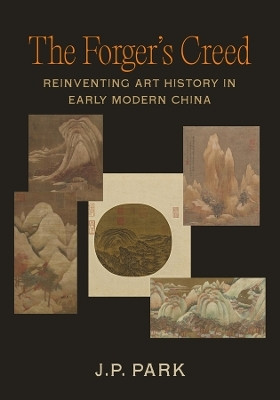
The Forger's Creed(English, Hardcover, Park J. P.)
- Park J. P.
Paperback & Hardcover deals ―
Amazon IndiaGOFlipkart ₹ 6353SnapdealGOSapnaOnlineGOJain Book AgencyGOBooks Wagon₹656Book ChorGOCrosswordGODC BooksGOe-book & Audiobook deals ―
Amazon India GOGoogle Play Books GOAudible GO* Price may vary from time to time.
* GO = We're not able to fetch the price (please check manually visiting the website).
Know about the book -
The Forger's Creed(English, Hardcover, Park J. P.) is written by Park J. P. and published by University of California Press. It's available with International Standard Book Number or ISBN identification 0520403800 (ISBN 10) and 9780520403802 (ISBN 13).
The first in-depth look at the history and legacies of forgeries in Chinese art. In 1634, scholar-official Zhang Taijie (b. ca. 1588) published a book titled A Record of Treasured Paintings (C. Baohui lu), presenting an extensive catalogue of a purportedly vast painting collection he claimed to have built. However, the entire book is Zhang's meticulously crafted forgery; he even forged paintings to match the documentation, and profited from trading them. Furthermore, the book intriguingly mirrors unfounded art-historical claims of its time. Prominent figures like Dong Qichang (1555-1636) made entirely fabricated arguments to assert legitimate lineages in Chinese art, designed to create a fictionalized history shaped by preferred beliefs rather than reality. While presenting the first comprehensive exploration of various forgery practices in early modern China-fabricated texts, forged paintings, and fictitious art history-The Forger's Creed examines the cultural, social, and genealogical desires, anxieties, and tensions prevalent in early modern China. Through thorough scrutiny of the historical irregularities introduced by these forgeries, J. P. Park highlights a peculiar and paradoxical phenomenon wherein forgeries transform into legitimate materials across Chinese history.
