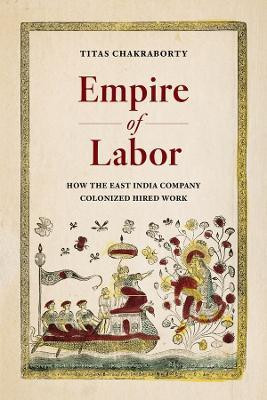
Empire of Labor(English, Paperback, Chakraborty Titas)
- Chakraborty Titas
Paperback & Hardcover deals ―
Amazon IndiaGOFlipkart ₹ 3818SnapdealGOSapnaOnlineGOJain Book AgencyGOBooks Wagon₹1,064Book ChorGOCrosswordGODC BooksGOe-book & Audiobook deals ―
Amazon India GOGoogle Play Books GOAudible GO* Price may vary from time to time.
* GO = We're not able to fetch the price (please check manually visiting the website).
Know about the book -
Empire of Labor(English, Paperback, Chakraborty Titas) is written by Chakraborty Titas and published by University of California Press. It's available with International Standard Book Number or ISBN identification 0520399641 (ISBN 10) and 9780520399648 (ISBN 13).
Empire of Labor tells the story of how hired workers experienced and responded to the rise to power over the long eighteenth century of the English East India Company (EIC), which perennially hired thousands of people in and around its settlements in Bengal. Focusing on boatmen and silk reelers as well as sailors and soldiers-a remarkable look at both indigenous and European workers-the story begins with the earliest accounts of the EIC's dealings with hired labor in the region, from 1651. Prior to EIC dominance, hired workers drove hard bargains with their employers, making demands that drew upon their own notions of wages, work rhythms, and time. When their demands were not met, they ran away, often to rival indigenous or European employers. Empire of Labor explores these demands and how they conflicted with the EIC's notions of discipline. Analyzing Bengali literary sources and Dutch and English archival materials, the book rethinks the ascendancy of the company state as a violent process involving removing competing employers, imposing army and police power, introducing new production technologies, and instituting draconian regulations which eliminated indigenous cultures of work. Most importantly, it depicts the lifeworlds of these recalcitrant workers, showing how they lived and resisted. A major intervention in histories of colonialism, labor, migration, and law, Empire of Labor ultimately recasts colonial rule as a novel form of state-labor relationship.
