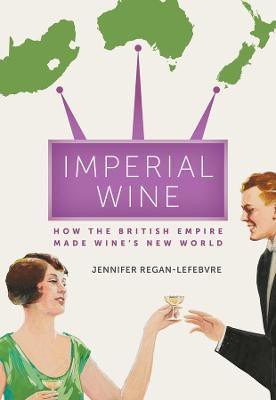
Imperial Wine(English, Hardcover, Regan-Lefebvre Jennifer)
- Regan-Lefebvre Jennifer
Paperback & Hardcover deals ―
Amazon IndiaGOFlipkart ₹ 3513SnapdealGOSapnaOnlineGOJain Book AgencyGOBooks Wagon₹1,163Book ChorGOCrosswordGODC BooksGOe-book & Audiobook deals ―
Amazon India GOGoogle Play Books GOAudible GO* Price may vary from time to time.
* GO = We're not able to fetch the price (please check manually visiting the website).
Know about the book -
Imperial Wine(English, Hardcover, Regan-Lefebvre Jennifer) is written by Regan-Lefebvre Jennifer and published by University of California Press. It's available with International Standard Book Number or ISBN identification 0520343689 (ISBN 10) and 9780520343689 (ISBN 13).
A fascinating and approachable deep dive into the colonial roots of the global wine industry. Imperial Wine is a bold, rigorous history of Britain's surprising role in creating the wine industries of Australia, South Africa, and New Zealand. Here, historian Jennifer Regan-Lefebvre bridges the genres of global commodity history and imperial history, presenting provocative new research in an accessible narrative. This is the first book to argue that today's global wine industry exists as a result of settler colonialism and that imperialism was central, not incidental, to viticulture in the British colonies. Wineries were established almost immediately after the colonization of South Africa, Australia, and New Zealand as part of a civilizing mission: tidy vines, heavy with fruit, were symbolic of Britain's subordination of foreign lands. Economically and culturally, nineteenth-century settler winemakers saw the British market as paramount. However, British drinkers were apathetic towards what they pejoratively called "colonial wine." The tables only began to turn after the First World War, when colonial wines were marketed as cheap and patriotic and started to find their niche among middle- and working-class British drinkers. This trend, combined with social and cultural shifts after the Second World War, laid the foundation for the New World revolution in the 1980s, making Britain into a confirmed country of wine-drinkers and a massive market for New World wines. These New World producers may have only received critical acclaim in the late twentieth century, but Imperial Wine shows that they had spent centuries wooing, and indeed manufacturing, a British market for inexpensive colonial wines. This book is sure to satisfy any curious reader who savors the complex stories behind this commodity chain.
