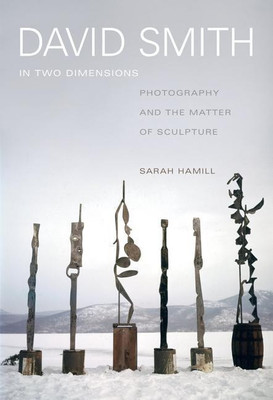
David Smith in Two Dimensions(English, Hardcover, Hamill Sarah)
- Hamill Sarah
Paperback & Hardcover deals ―
Amazon IndiaGOFlipkart ₹ 6421SnapdealGOSapnaOnlineGOJain Book AgencyGOBooks Wagon₹1,020Book ChorGOCrosswordGODC BooksGOe-book & Audiobook deals ―
Amazon India GOGoogle Play Books GOAudible GO* Price may vary from time to time.
* GO = We're not able to fetch the price (please check manually visiting the website).
Know about the book -
David Smith in Two Dimensions(English, Hardcover, Hamill Sarah) is written by Hamill Sarah and published by University of California Press. It's available with International Standard Book Number or ISBN identification 0520280342 (ISBN 10) and 9780520280342 (ISBN 13).
How does photography shape the way we see sculpture? In David Smith in Two Dimensions, Sarah Hamill broaches this question through an in-depth consideration of the photography of American sculptor David Smith (1906 1965). Smith was a modernist known for radically shifting the terms of sculpture, a medium traditionally defined by casting, modeling, and carving. He was the first to use industrial welding as a sustained technique for large-scale sculpture, influencing a generation of minimalists to come. What is less known about Smith is his use of the camera to document his own sculptures as well as everyday objects, spaces, and bodies. His photographs of his sculptures were published in countless exhibition catalogs, journals, and newspapers, often as anonymous illustrations. Far from being neutral images, these photographs direct a pictorial encounter with spatial form and structure the public display of his work. David Smith in Two Dimensions looks at the sculptor's adoption of unconventional backdrops, alternative vantage points, and unusual lighting effects and exposures to show how he used photography to dramatize and distance objects.This comprehensive and penetrating account also introduces Smith's expansive archive of copy prints, slides, and negatives, many of which are seen here for the first time. Hamill proposes a new understanding of Smith's sculpture through photography, exploring issues that are in turn vital to discourses of modern sculpture, sculptural aesthetics, and postwar art. In Smith's photography, we see an artist moving fluidly between media to define what a sculptural object was and how it would be encountered publicly.
