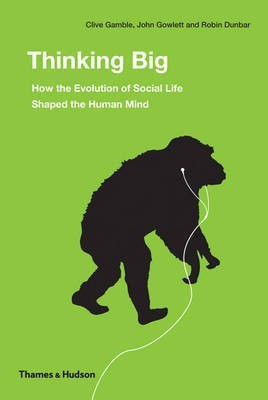
Thinking Big(English, Electronic book text, Dunbar Robin Professor of Geography)
- Dunbar Robin Professor of Geography
Paperback & Hardcover deals ―
Amazon IndiaGOFlipkart ₹ 3384SnapdealGOSapnaOnlineGOJain Book AgencyGOBooks Wagon₹552Book ChorGOCrosswordGODC BooksGOe-book & Audiobook deals ―
Amazon India GOGoogle Play Books GOAudible GO* Price may vary from time to time.
* GO = We're not able to fetch the price (please check manually visiting the website).
Know about the book -
Thinking Big(English, Electronic book text, Dunbar Robin Professor of Geography) is written by Dunbar Robin Professor of Geography and published by Thames & Hudson Ltd. It's available with International Standard Book Number or ISBN identification 0500772142 (ISBN 10) and 9780500772140 (ISBN 13).
A closer look at genealogy, incorporating how biological, anthropological, and technical factors can influence human lives We are at a pivotal moment in understanding our remote ancestry and its implications for how we live today. The barriers to what we can know about our distant relatives have been falling as a result of scientific advance, such as decoding the genomes of humans and Neanderthals, and bringing together different perspectives to answer common questions. These collaborations have brought new knowledge and suggested fresh concepts to examine. The results have shaken the old certainties. The results are profound; not just for the study of the past but for appreciating why we conduct our social lives in ways, and at scales, that are familiar to all of us. But such basic familiarity raises a dilemma. When surrounded by the myriad technical and cultural innovations that support our global, urbanized lifestyles we can lose sight of the small social worlds we actually inhabit and that can be traced deep into our ancestry. So why do we need art, religion, music, kinship, myths, and all the other facets of our over-active imaginations if the reality of our effective social worlds is set by a limit of some one hundred and fifty partners (Dunbar's number) made of family, friends, and useful acquaintances? How could such a social community lead to a city the size of London or a country as large as China? Do we really carry our hominin past into our human present? It is these small worlds, and the link they allow to the study of the past that forms the central point in this book.
