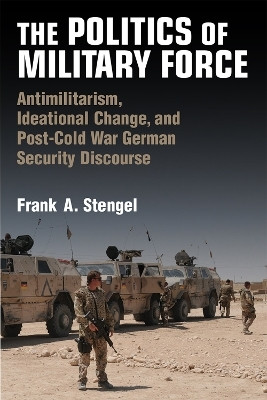
The Politics of Military Force(English, Hardcover, Stengel Frank A)
- Stengel Frank A
Paperback & Hardcover deals ―
Amazon IndiaGOFlipkart ₹ 2663SnapdealGOSapnaOnlineGOJain Book AgencyGOBooks Wagon₹175Book ChorGOCrosswordGODC BooksGOe-book & Audiobook deals ―
Amazon India GOGoogle Play Books GOAudible GO* Price may vary from time to time.
* GO = We're not able to fetch the price (please check manually visiting the website).
Know about the book -
The Politics of Military Force(English, Hardcover, Stengel Frank A) is written by Stengel Frank A and published by The University of Michigan Press. It's available with International Standard Book Number or ISBN identification 0472132210 (ISBN 10) and 9780472132218 (ISBN 13).
The Politics of Military Force examines the dynamics of discursive change that made participation in military operations possible against the background of German antimilitarist culture. Once considered a strict taboo, so-called out-of-area operations have now become widely considered by German policymakers to be without alternative. The book argues that an understanding of how certain policies are made possible (in this case, military operations abroad and force transformation), one needs to focus on processes of discursive change that result in different policy options appearing rational, appropriate, feasible, or even self-evident. Drawing on Essex School discourse theory, the book develops a theoretical framework to understand how discursive change works, and elaborates on how discursive change makes once unthinkable policy options not only acceptable but even without alternative. Based on a detailed discourse analysis of more than 25 years of German parliamentary debates, The Politics of Military Force provides an explanation for: (1) the emergence of a new hegemonic discourse in German security policy after the end of the Cold War (discursive change), (2) the rearticulation of German antimilitarism in the process (ideational change/norm erosion) and (3) the resulting making-possible of military operations and force transformation (policy change). In doing so, the book also demonstrates the added value of a poststructuralist approach compared to the naive realism and linear conceptions of norm change so prominent in the study of German foreign policy and International Relations more generally.
