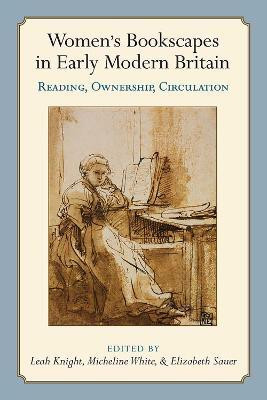
Women's Bookscapes in Early Modern Britain(English, Hardcover, Knight Leah)
- Knight Leah
Paperback & Hardcover deals ―
Amazon IndiaGOFlipkart ₹ 11811SnapdealGOSapnaOnlineGOJain Book AgencyGOBooks Wagon₹319Book ChorGOCrosswordGODC BooksGOe-book & Audiobook deals ―
Amazon India GOGoogle Play Books GOAudible GO* Price may vary from time to time.
* GO = We're not able to fetch the price (please check manually visiting the website).
Know about the book -
Women's Bookscapes in Early Modern Britain(English, Hardcover, Knight Leah) is written by Knight Leah and published by The University of Michigan Press. It's available with International Standard Book Number or ISBN identification 0472131095 (ISBN 10) and 9780472131099 (ISBN 13).
Women in 16th- and 17th-century Britain read, annotated, circulated, inventoried, cherished, criticized, prescribed, and proscribed books in various historically distinctive ways. Yet, unlike that of their male counterparts, the study of women's reading practices and book ownership has been an elusive and largely overlooked field. In thirteen probing essays, Women's Bookscapesin Early Modern Britain brings together the work of internationally renowned scholars investigating key questions about early modern British women's figurative, material, and cultural relationships with books. What constitutes evidence of women's readerly engagement? How did women use books to achieve personal, political, religious, literary, economic, social, familial, or communal goals? How does new evidence of women's libraries and book usage challenge received ideas about gender in relation to knowledge, education, confessional affiliations, family ties, and sociability? How do digital tools offer new possibilities for the recovery of information on early modern women readers? The volume's three-part structure highlights case studies of individual readers and their libraries; analyses of readers and readership in the context of their interpretive communities; and new types of scholarly evidence-lists of confiscated books and convent rules, for example-as well as new methodologies and technologies for ongoing research. These essays dismantle binaries of private and public; reading and writing; female and male literary engagement and production; and ownership and authorship. Interdisciplinary, timely, cohesive, and concise, this collection's fresh, revisionary approaches represent substantial contributions to scholarship in early modern material culture; book history and print culture; women's literary and cultural history; library studies; and reading and collecting practices more generally.
