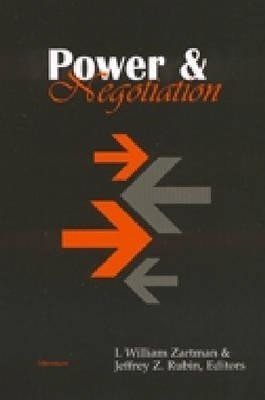
Power and Negotiation(English, Paperback, unknown)
- unknown
Paperback & Hardcover deals ―
Amazon IndiaGOFlipkart ₹ 4578SnapdealGOSapnaOnlineGOJain Book AgencyGOBooks Wagon₹209Book ChorGOCrosswordGODC BooksGOe-book & Audiobook deals ―
Amazon India GOGoogle Play Books GOAudible GO* Price may vary from time to time.
* GO = We're not able to fetch the price (please check manually visiting the website).
Know about the book -
Power and Negotiation(English, Paperback, unknown) is written by unknown and published by The University of Michigan Press. It's available with International Standard Book Number or ISBN identification 0472089072 (ISBN 10) and 9780472089079 (ISBN 13).
The editors to this volume begin their introduction with an age-old puzzle in negotiation: "How can weaker parties negotiate with stronger parties and still get something?" Addressing this and other paradoxes, Power and Negotiation produces new findings about the concept of power and about its applications in negotiations between countries. Rejecting the notions of power as a resource and power as an ability, the work defines power as an act that is designed to cause another party to move in a desired direction, thus separating the concept both from its source and from its effects and leaving it open to much more detailed analysis. Using this new definition of the concept of power, this book examines the relations between parties in symmetrical and asymmetrical negotiations. I. William Zartman and Jeffrey Z. Rubin argue that negotiations between countries that are not equal in power tend to be more efficient and effective than symmetrical negotiations, as weaker and stronger parties negotiating together know their roles and are able to get appropriate benefits to each side in a negotiated agreement. In cases of symmetry or near symmetry the countries, whether they are equally weak or equally strong, tend to spend most of their time maintaining their status and waste inordinate amounts of time before they ever come to an agreement. At the same time, Power and Negotiation also examines perceived power on the basis of which symmetries and asymmetries in the relations between parties can be identified. It then looks at six cases of clear asymmetry, two cases of symmetry, and one mixed situation. The book ends with a careful examination of lessons for practice and lessons for theory. The book will appeal to students of negotiation strategy and international relations.
