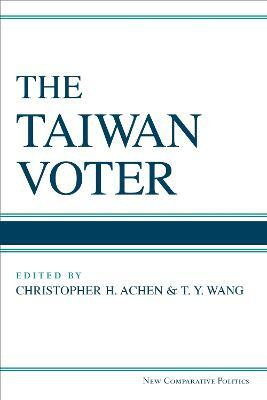
The Taiwan Voter(English, Paperback, Achen Christopher Henry)
- Achen Christopher Henry
Paperback & Hardcover deals ―
Amazon IndiaGOFlipkart ₹ 3701SnapdealGOSapnaOnlineGOJain Book AgencyGOBooks Wagon₹620Book ChorGOCrosswordGODC BooksGOe-book & Audiobook deals ―
Amazon India GOGoogle Play Books GOAudible GO* Price may vary from time to time.
* GO = We're not able to fetch the price (please check manually visiting the website).
Know about the book -
The Taiwan Voter(English, Paperback, Achen Christopher Henry) is written by Achen Christopher Henry and published by The University of Michigan Press. It's available with International Standard Book Number or ISBN identification 0472053531 (ISBN 10) and 9780472053537 (ISBN 13).
The Taiwan Voter examines the critical role ethnic and national identities play in politics, utilizing the case of Taiwan. Although elections there often raise international tensions, and have led to military demonstrations by China, no scholarly books have examined how Taiwan's voters make electoral choices in a dangerous environment. Critiquing the conventional interpretation of politics as an ideological battle between liberals and conservatives, The Taiwan Voter demonstrates in Taiwan the party system and voters' responses are shaped by one powerful determinant of national identity-the China factor. Taiwan's electoral politics draws international scholarly interest because of the prominent role of ethnic and national identification. While in most countries the many tangled strands of competing identities are daunting for scholarly analysis, in Taiwan the cleavages are powerful and limited in number, so the logic of interrelationships among issues, partisanship, and identity are particularly clear. The Taiwan Voter unites experts to investigate the ways in which social identities, policy views, and partisan preferences intersect and influence each other. These novel findings have wide applicability to other countries, and will be of interest to a broad range of social scientists interested in identity politics.
