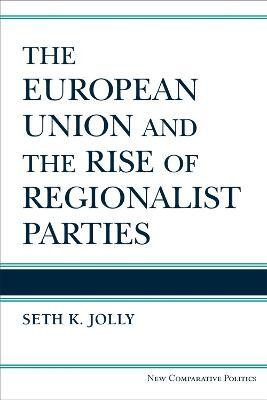
The European Union and the Rise of Regionalist Parties(English, Paperback, Jolly Seth Kincaid)
- Jolly Seth Kincaid
Paperback & Hardcover deals ―
Amazon IndiaGOFlipkart ₹ 4488SnapdealGOSapnaOnlineGOJain Book AgencyGOBooks Wagon₹364Book ChorGOCrosswordGODC BooksGOe-book & Audiobook deals ―
Amazon India GOGoogle Play Books GOAudible GO* Price may vary from time to time.
* GO = We're not able to fetch the price (please check manually visiting the website).
Know about the book -
The European Union and the Rise of Regionalist Parties(English, Paperback, Jolly Seth Kincaid) is written by Jolly Seth Kincaid and published by The University of Michigan Press. It's available with International Standard Book Number or ISBN identification 0472052594 (ISBN 10) and 9780472052592 (ISBN 13).
Rather than weakening the forces of nationalism among member states, the expanding power of the European Union actually fosters conditions favourable to regionalist movements within traditional nation-states. Using a cross-national, quantitative study of the advent of regionalist political parties and their success in national parliamentary elections since the 1960s, along with a detailed case study of the fortunes of the pro-independence Scottish National Party, Seth K. Jolly demonstrates that supranational integration and subnational fragmentation are not merely coincidental but related in a theoretical and predictable way. At the core of his argument, Jolly posits the Viability Theory: the theory that the EU makes smaller states more viable and more politically attractive by diminishing the relative economic and political advantages of larger-sized states. European integration allows regionalist groups to make credible claims that they do not need the state to survive because their regions are part of the EU, which provides access to markets, financial institutions, foreign policy, and other benefits. Ultimately, Jolly emphasizes, scholars and policy-makers must recognize that the benefits of European integration come with the challenge of increased regionalist mobilization that has the potential to reshape the national boundaries of Europe.
