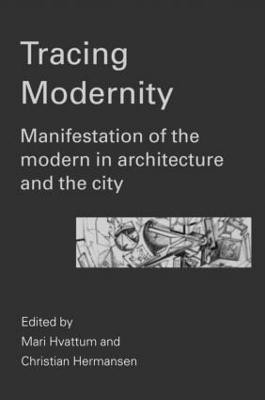
Tracing Modernity(English, Paperback, Hvattum Mari)
- Hvattum Mari
Paperback & Hardcover deals ―
Amazon IndiaGOFlipkart ₹ 4607SnapdealGOSapnaOnlineGOJain Book AgencyGOBooks Wagon₹239Book ChorGOCrosswordGODC BooksGOe-book & Audiobook deals ―
Amazon India GOGoogle Play Books GOAudible GO* Price may vary from time to time.
* GO = We're not able to fetch the price (please check manually visiting the website).
Know about the book -
Tracing Modernity(English, Paperback, Hvattum Mari) is written by Hvattum Mari and published by Taylor & Francis Ltd. It's available with International Standard Book Number or ISBN identification 0415305128 (ISBN 10) and 9780415305129 (ISBN 13).
First published in 2004. Walter Benjamin famously defined modernity as "the world dominated by its phantasmagorias". The chapters in this book focus on one such phantasmagoria, namely that of 'modernity' itself. From the late seventeenth century until today, the 'modern' has served as a key category by which to understand an ever-changing present. Art and architecture have played a key role in this pursuit as the means by which the modern was to manifest itself. The aim of this anthology is to trace the modern project through its multifarious manifestations, in order to understand contemporary culture in a deeper sense than facile discussions of modernism and post-modernism often grant. Drawing on architectural and urban history as well as philosophy and sociology, the chapters outline the complex and conflicting roots of modernity by tracing its manifestations in architecture and the city. The book is divided into three parts, each exploring a distinct aspect of modernity. While part one scrutinizes the much-abused concepts of 'modernity' , 'modernism' and 'the modern' , parts two and three look at the manifestations of the modern in architecture and the city respectively. Focusing particularly on the transition between historicism and modernism, the chapters offer a re-interpretation of early modern architectural and urban culture as it came to expression in people such as Cerda, Semper, Boetticher, Scott, Baudelaire, the Goncourt brothers, Benjamin, Warburg, Kracauer, Mackintosh, Behrens, Taut, and Le Corbusier. For all their differences, these were thinkers and practitioners whose undisputed modernity arose from a deep preoccupation with history. A re-reading of their legacy may throw light on the neglected reciprocity between modernity and its historical conditions of becoming.
