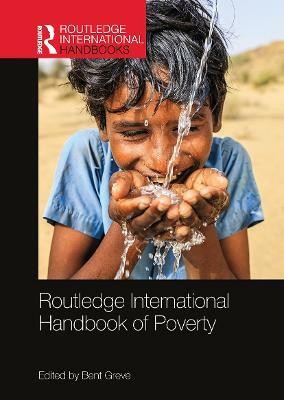
Routledge International Handbook of Poverty(English, Paperback, unknown)
- unknown
Paperback & Hardcover deals ―
Amazon IndiaGOFlipkart ₹ 4150SnapdealGOSapnaOnlineGOJain Book AgencyGOBooks Wagon₹804Book ChorGOCrosswordGODC BooksGOe-book & Audiobook deals ―
Amazon India GOGoogle Play Books GOAudible GO* Price may vary from time to time.
* GO = We're not able to fetch the price (please check manually visiting the website).
Know about the book -
Routledge International Handbook of Poverty(English, Paperback, unknown) is written by unknown and published by Taylor & Francis Ltd. It's available with International Standard Book Number or ISBN identification 036772670X (ISBN 10) and 9780367726706 (ISBN 13).
The first of the UN Millennium Goals was to reduce extreme poverty and in 2014 it was halved compared to 1990, and now the goal is to eradicate poverty and hunger by 2030. The reduction in poverty is, to a high degree, the consequence of the rapid economic development in a few countries, especially China, but in many countries around the globe poverty is still at a high level and is influencing societies' overall development. It is against this background that this Handbook provides an up-to-date analysis and overview of the topic from a large variety of theoretical and methodological angles. Organised into four parts, the Handbook provides knowledge on what poverty is, how it has developed, and what type of policies might be able to succeed in reducing poverty. Part I investigates conceptual issues and relates concepts to people's relative position in society and the understanding of justice. Part II shows how poverty has developed. It combines existing empirical knowledge with regional/national understandings of the issue of poverty. Part III analyses policies and interventions with the aim of reducing or alleviating poverty within a national as well as global context. It includes a variety of countries and examples. Finally, Part IV tells us what can be done about poverty; what instruments are available to end poverty as we know it today. This volume will be an invaluable reference book for students and scholars throughout the social sciences, particularly in sociology, social policy, public policy, development studies, international relations and politics.
