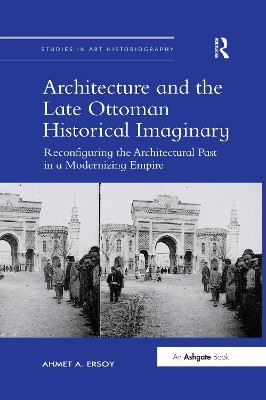
Architecture and the Late Ottoman Historical Imaginary(English, Paperback, Ersoy Ahmet A.)
- Ersoy Ahmet A.
Paperback & Hardcover deals ―
Amazon IndiaGOFlipkart ₹ 3126SnapdealGOSapnaOnlineGOJain Book AgencyGOBooks Wagon₹2,288Book ChorGOCrosswordGODC BooksGOe-book & Audiobook deals ―
Amazon India GOGoogle Play Books GOAudible GO* Price may vary from time to time.
* GO = We're not able to fetch the price (please check manually visiting the website).
Know about the book -
Architecture and the Late Ottoman Historical Imaginary(English, Paperback, Ersoy Ahmet A.) is written by Ersoy Ahmet A. and published by Taylor & Francis Ltd. It's available with International Standard Book Number or ISBN identification 0367432838 (ISBN 10) and 9780367432836 (ISBN 13).
While European eclecticism is examined as a critical and experimental moment in western art history, little research has been conducted to provide an intellectual depth of field to the historicist pursuits of late Ottoman architects as they maneuvered through the nineteenth century's vast inventory of available styles and embarked on a revivalist/Orientalist program they identified as the 'Ottoman Renaissance.' Ahmet A. Ersoy's book examines the complex historicist discourse underlying this belated 'renaissance' through a close reading of a text conceived as the movement's canonizing manifesto: the Usul-i Mi'mari-i 'Osmani [The Fundamentals of Ottoman Architecture] (Istanbul, 1873). In its translocal, cross-disciplinary scope, Ersoy's work explores the creative ways in which the Ottoman authors straddled the art-historical mainstream and their new, self-orientalizing aesthetics of locality. The study reveals how Orientalism was embraced by its very objects, the self-styled 'Orientals' of the modern world, as a marker of authenticity, and a strategically located aesthetic tool to project universally recognizable images of cultural difference. Rejecting the lesser, subsidiary status ascribed to non-western Orientalisms, Ersoy's work contributes to recent, post-Saidian directions in the study of cultural representation that resituate the field of Orientalism beyond its polaristic core, recognizing its cross-cultural potential as a polyvalent discourse.
