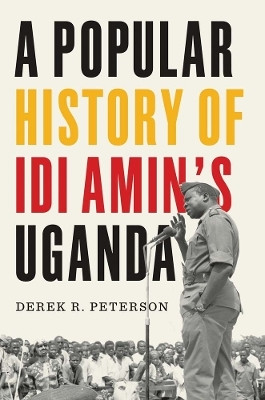
A Popular History of Idi Amin's Uganda(English, Hardcover, Peterson Derek R.)
- Peterson Derek R.
Paperback & Hardcover deals ―
Amazon IndiaGOFlipkart ₹ 3017SnapdealGOSapnaOnlineGOJain Book AgencyGOBooks Wagon₹303Book ChorGOCrosswordGODC BooksGOe-book & Audiobook deals ―
Amazon India GOGoogle Play Books GOAudible GO* Price may vary from time to time.
* GO = We're not able to fetch the price (please check manually visiting the website).
Know about the book -
A Popular History of Idi Amin's Uganda(English, Hardcover, Peterson Derek R.) is written by Peterson Derek R. and published by Yale University Press. It's available with International Standard Book Number or ISBN identification 0300278381 (ISBN 10) and 9780300278385 (ISBN 13).
How Africa's most notorious tyrant made his oppressive regime seem both necessary and patriotic "Peterson, an expert archivist, has created, from heaps of file folders, magnetic tapes, and other materials recovered from abandoned storage rooms around the country, what is probably the largest organized repository of government documents anywhere in Africa. . . . The details of what they found, and especially what they didn't find, are fascinating."-Helen Epstein, New York Review of Books Idi Amin ruled Uganda between 1971 and 1979, inflicting tremendous violence on the people of the country. How did Amin's regime survive for eight calamitous years? Drawing on recently uncovered archival material, Derek Peterson reconstructs the political logic of the era, focusing on the ordinary people-civil servants, curators and artists, businesspeople, patriots-who invested their energy and resources in making the government work. Peterson reveals how Amin (1928-2003) led ordinary people to see themselves as front-line soldiers in a global war against imperialism and colonial oppression. They worked tirelessly to ensure that government institutions kept functioning, even as resources dried up and political violence became pervasive. In this case study of how principled, talented, and patriotic people sacrificed themselves in service to a dictator, Peterson provides lessons for our own time.
