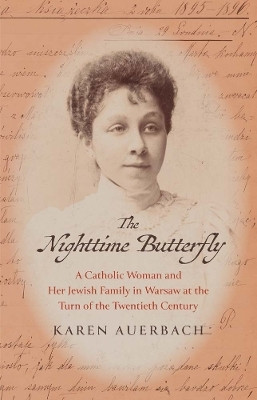
The Nighttime Butterfly(English, Hardcover, Auerbach Karen)
- Auerbach Karen
Paperback & Hardcover deals ―
Amazon IndiaGOFlipkart ₹ 3126SnapdealGOSapnaOnlineGOJain Book AgencyGOBooks Wagon₹333Book ChorGOCrosswordGODC BooksGOe-book & Audiobook deals ―
Amazon India GOGoogle Play Books GOAudible GO* Price may vary from time to time.
* GO = We're not able to fetch the price (please check manually visiting the website).
Know about the book -
The Nighttime Butterfly(English, Hardcover, Auerbach Karen) is written by Auerbach Karen and published by Yale University Press. It's available with International Standard Book Number or ISBN identification 0300270836 (ISBN 10) and 9780300270839 (ISBN 13).
A dynamic history of life in turn-of-the-century Warsaw through the eyes of a young woman and her Jewish family who converted to Catholicism When Alicja Lewental's parents came of age in the middle of the nineteenth century, they believed they did not have to choose between two communities, one Polish and the other Jewish. But by the time Alicja was growing up in the 1890s, it seemed that for some Polish nationalists there was little Jews could do to be accepted unequivocally as Poles. As Alicja entered young womanhood and her father, a prominent publisher, became the target of polemics casting him as an outsider in Polish culture, her mother came to believe that only through her daughters' conversion to Catholicism and marriage to Catholic men could their family achieve acceptance in Polish society. The Lewentals' lives and their aspirations for belonging played out in Warsaw's homes, salons, and bookstores in a modernizing city. Drawing on Alicja Lewental's diary and other sources, historian Karen Auerbach provides a unique window onto how the Lewentals and their circle navigated a time of increasing ambivalence about the possibility for Jewish belonging to the Polish nation. As exclusionary notions of what it meant to be Polish gained traction in politics, Alicja and her family encountered these ideas in their private lives.
