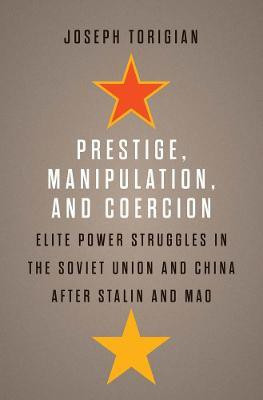
Prestige, Manipulation, and Coercion(English, Hardcover, Torigian Joseph)
- Torigian Joseph
Paperback & Hardcover deals ―
Amazon IndiaGOFlipkart ₹ 5971SnapdealGOSapnaOnlineGOJain Book AgencyGOBooks Wagon₹310Book ChorGOCrosswordGODC BooksGOe-book & Audiobook deals ―
Amazon India GOGoogle Play Books GOAudible GO* Price may vary from time to time.
* GO = We're not able to fetch the price (please check manually visiting the website).
Know about the book -
Prestige, Manipulation, and Coercion(English, Hardcover, Torigian Joseph) is written by Torigian Joseph and published by Yale University Press. It's available with International Standard Book Number or ISBN identification 0300254237 (ISBN 10) and 9780300254235 (ISBN 13).
How succession in authoritarian regimes was less a competition of visions for the future and more a settling of scores "Joseph Torigian's stellar research and personal interviews have produced a brilliant, meticulous study. It fundamentally undermines what political scientists have presumed to be the way Chinese Communist and Soviet politics operate."-Dorothy J. Solinger, University of California, Irvine "[Torigian's] work is absolutely outstanding."-Stephen Kotkin, ChinaTalk The political successions in the Soviet Union and China after Stalin and Mao, respectively, are often explained as triumphs of inner-party democracy, leading to a victory of "reformers" over "conservatives" or "radicals." In traditional thinking, Leninist institutions provide competitors a mechanism for debating policy and making promises, stipulate rules for leadership selection, and prevent the military and secret police from playing a coercive role. Here, Joseph Torigian argues that the post-cult of personality power struggles in history's two greatest Leninist regimes were instead shaped by the politics of personal prestige, historical antagonisms, backhanded political maneuvering, and violence. Mining newly discovered material from Russia and China, Torigian challenges the established historiography and suggests a new way of thinking about the nature of power in authoritarian regimes.
