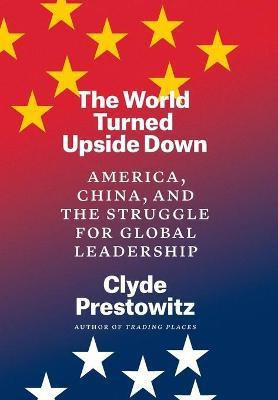
The World Turned Upside Down(English, Hardcover, Prestowitz Clyde)
- Prestowitz Clyde
Paperback & Hardcover deals ―
Amazon IndiaGOFlipkart ₹ 2395SnapdealGOSapnaOnlineGOJain Book AgencyGOBooks Wagon₹221Book ChorGOCrosswordGODC BooksGOe-book & Audiobook deals ―
Amazon India GOGoogle Play Books GOAudible GO* Price may vary from time to time.
* GO = We're not able to fetch the price (please check manually visiting the website).
Know about the book -
The World Turned Upside Down(English, Hardcover, Prestowitz Clyde) is written by Prestowitz Clyde and published by Yale University Press. It's available with International Standard Book Number or ISBN identification 0300248490 (ISBN 10) and 9780300248494 (ISBN 13).
An authority on Asia and globalization identifies the challenges China's growing power poses and how it must be confronted "Timely and thought-provoking. . . . An unsparing analysis of how Washington's elite fell into the grip of their China delusion."-James Kynge, Financial Times "Prestowitz doesn't just point out problems; he offers a detailed, 25-page 'Plan for America.' An excellent comprehensive study from an expert on the subject."-Kirkus Reviews (starred review) When China joined the World Trade Organization in 2001, most experts expected the WTO rules and procedures to liberalize China and make it "a responsible stakeholder in the liberal world order." But the experts made the wrong bet. China today is liberalizing neither economically nor politically but, if anything, becoming more authoritarian and mercantilist. In this book, notably free of partisan posturing and inflammatory rhetoric, renowned globalization and Asia expert Clyde Prestowitz describes the key challenges posed by China and the strategies America and the Free World must adopt to meet them. He argues that these must be more sophisticated and more comprehensive than a narrowly targeted trade war. Rather, he urges strategies that the United States and its allies can use unilaterally without contravening international or domestic law.
