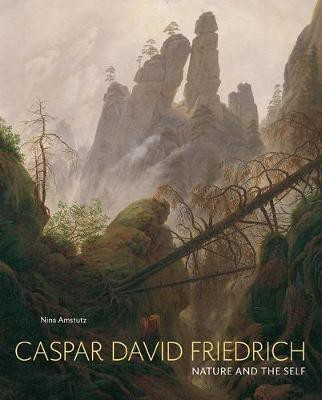
Caspar David Friedrich(English, Hardcover, Amstutz Nina)
- Amstutz Nina
Paperback & Hardcover deals ―
Amazon IndiaGOFlipkart ₹ 5785SnapdealGOSapnaOnlineGOJain Book AgencyGOBooks Wagon₹336Book ChorGOCrosswordGODC BooksGOe-book & Audiobook deals ―
Amazon India GOGoogle Play Books GOAudible GO* Price may vary from time to time.
* GO = We're not able to fetch the price (please check manually visiting the website).
Know about the book -
Caspar David Friedrich(English, Hardcover, Amstutz Nina) is written by Amstutz Nina and published by Yale University Press. It's available with International Standard Book Number or ISBN identification 0300246161 (ISBN 10) and 9780300246162 (ISBN 13).
A revelatory look at how the mature work of Caspar David Friedrich engaged with concurrent developments in natural science and philosophy Best known for his atmospheric landscapes featuring contemplative figures silhouetted against night skies and morning mists, Caspar David Friedrich (1774-1840) came of age alongside a German Romantic philosophical movement that saw nature as an organic and interconnected whole. The naturalists in his circle believed that observations about the animal, vegetable, and mineral kingdoms could lead to conclusions about human life. Many of Friedrich's often-overlooked later paintings reflect his engagement with these philosophical ideas through a focus on isolated shrubs, trees, and rocks. Others revisit earlier compositions or iconographic motifs but subtly metamorphose the previously distinct human figures into the natural landscape. In this revelatory book, Nina Amstutz combines fresh visual analysis with broad interdisciplinary research to investigate the intersection of landscape painting, self-exploration, and the life sciences in Friedrich's mature work. Drawing connections between the artist's anthropomorphic landscape forms and contemporary discussions of biology, anatomy, morphology, death, and decomposition, Amstutz brings Friedrich's work into the larger discourse surrounding art, nature, and life in the 19th century.
