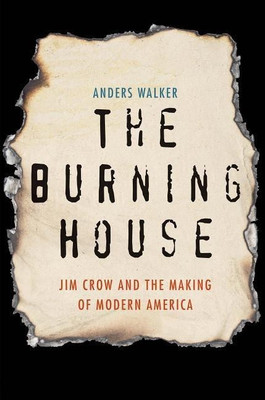
The Burning House(English, Hardcover, Walker Anders)
- Walker Anders
Paperback & Hardcover deals ―
Amazon IndiaGOFlipkart ₹ 2463SnapdealGOSapnaOnlineGOJain Book AgencyGOBooks Wagon₹364Book ChorGOCrosswordGODC BooksGOe-book & Audiobook deals ―
Amazon India GOGoogle Play Books GOAudible GO* Price may vary from time to time.
* GO = We're not able to fetch the price (please check manually visiting the website).
Know about the book -
The Burning House(English, Hardcover, Walker Anders) is written by Walker Anders and published by Yale University Press. It's available with International Standard Book Number or ISBN identification 0300223986 (ISBN 10) and 9780300223989 (ISBN 13).
A startling and gripping reexamination of the Jim Crow era, as seen through the eyes of some of the most important American writers "Walker has opened up a fresh way of thinking about the intellectual history of the South during the civil-rights movement."-Robert Greene, The Nation In this dramatic reexamination of the Jim Crow South, Anders Walker demonstrates that racial segregation fostered not simply terror and violence, but also diversity, one of our most celebrated ideals. He investigates how prominent intellectuals like Robert Penn Warren, James Baldwin, Eudora Welty, Ralph Ellison, Flannery O'Connor, and Zora Neale Hurston found pluralism in Jim Crow, a legal system that created two worlds, each with its own institutions, traditions, even cultures. The intellectuals discussed in this book all agreed that black culture was resilient, creative, and profound, brutally honest in its assessment of American history. By contrast, James Baldwin likened white culture to a "burning house," a frightening place that endorsed racism and violence to maintain dominance. Why should black Americans exchange their experience for that? Southern whites, meanwhile, saw themselves preserving a rich cultural landscape against the onslaught of mass culture and federal power, a project carried to the highest levels of American law by Supreme Court justice and Virginia native Lewis F. Powell, Jr. Anders Walker shows how a generation of scholars and judges has misinterpreted Powell's definition of diversity in the landmark case Regents v. Bakke, forgetting its Southern origins and weakening it in the process. By resituating the decision in the context of Southern intellectual history, Walker places diversity on a new footing, independent of affirmative action but also free from the constraints currently placed on it by the Supreme Court. With great clarity and insight, he offers a new lens through which to understand the history of civil rights in the United States.
