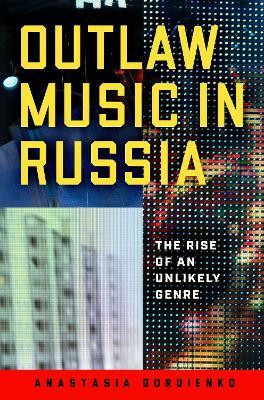
Outlaw Music in Russia(English, Hardcover, Gordienko Anastasia)
- Gordienko Anastasia
Paperback & Hardcover deals ―
Amazon IndiaGOFlipkart ₹ 9066SnapdealGOSapnaOnlineGOJain Book AgencyGOBooks Wagon₹465Book ChorGOCrosswordGODC BooksGOe-book & Audiobook deals ―
Amazon India GOGoogle Play Books GOAudible GO* Price may vary from time to time.
* GO = We're not able to fetch the price (please check manually visiting the website).
Know about the book -
Outlaw Music in Russia(English, Hardcover, Gordienko Anastasia) is written by Gordienko Anastasia and published by University of Wisconsin Press. It's available with International Standard Book Number or ISBN identification 0299340104 (ISBN 10) and 9780299340100 (ISBN 13).
The Russian shanson can be heard across the country today, on radio and television shows, at mass events like political rallies, and even at the Kremlin. Yet despite its ubiquity, it has attracted almost no scholarly attention. Anastasia Gordienko provides the first full history of the shanson, from its tenuous ties to early modern criminals' and robbers' folk songs, through its immediate generic predecessors in the Soviet Union, to its current incarnation as the soundtrack for daily life in Russia. It is difficult to firmly define the shanson or its family of song genres, but they all have some connection, whether explicit or implicit, to the criminal underworld or to groups or activities otherwise considered subversive. Traditionally produced by and popular among criminals and other marginalized groups, and often marked by characters and themes valorizing illegal activities, the songs have undergone censorship since the early nineteenth century. Technically legal only since the collapse of the Soviet Union, the shanson is today not only broadly popular but also legitimized by Vladimir Putin's open endorsement of the genre. With careful research and incisive analysis, Gordienko deftly details the shanson's history, development, and social meanings. Attempts by imperial rulers, and later by Soviet leaders, to repress the songs and the lifestyles they romanticized not only did little to discourage their popularity but occasionally helped the genre flourish. Criminals and liberal intelligentsia mingled in the Gulag system, for instance, and this contact introduced censored songs to an educated, disaffected populace that inscribed its own interpretations and became a major point of wider dissemination after the Gulag camps were closed. Gordienko also investigates the shanson as it exists in popular culture today: not divorced from its criminal undertones (or overtones) but celebrated for them. She argues that the shanson expresses fundamental themes of Russian culture, allowing for the articulation of anxieties, hopes, and dissatisfactions that are discouraged or explicitly forbidden otherwise.
