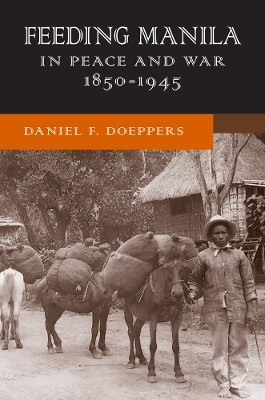
Feeding Manila in Peace and War, 1850-1945(English, Hardcover, Doeppers Daniel F.)
- Doeppers Daniel F.
Paperback & Hardcover deals ―
Amazon IndiaGOFlipkart ₹ 9797SnapdealGOSapnaOnlineGOJain Book AgencyGOBooks Wagon₹1,832Book ChorGOCrosswordGODC BooksGOe-book & Audiobook deals ―
Amazon India GOGoogle Play Books GOAudible GO* Price may vary from time to time.
* GO = We're not able to fetch the price (please check manually visiting the website).
Know about the book -
Feeding Manila in Peace and War, 1850-1945(English, Hardcover, Doeppers Daniel F.) is written by Doeppers Daniel F. and published by University of Wisconsin Press. It's available with International Standard Book Number or ISBN identification 0299305104 (ISBN 10) and 9780299305109 (ISBN 13).
The first book to explore the critical problem of provisioning the "megacity" Over the past decade policymakers and scholars have come to realize that getting food, water, and services to the millions who live in the world's few dozen megacities is one of the twenty-first century's most formidable challenges. As these populations continue to grow, apocalyptic scenarios-sprawling slums plagued by hunger, disease, and social disarray-become increasingly plausible. In Feeding Manila in Peace and War, Daniel F. Doeppers traces a century in the life of Manila, one of the world's great megacities, to show how it grew and what sustained it. Although the export of commodities played a role, Doeppers argues that change in this era was also fueled by the relationship between the metropolis and the surrounding countryside, and in particular by the country's ability to provide the city's population with food and drink. Doeppers follows each commodity-rice, produce, fish, fowl, meat, milk, flour, coffee-in its complex connections with other commodities. In the process he considers the changing ecology of the region as well as the social fabric that weaves together farmers, merchants, transporters, storekeepers, and door-to-door vendors.
