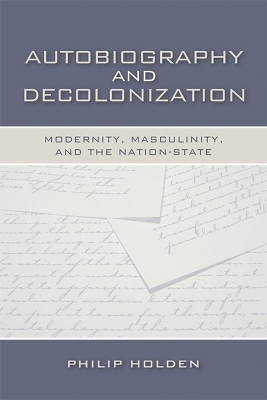
Autobiography and Decolonization(English, Hardcover, Holden Philip)
- Holden Philip
Paperback & Hardcover deals ―
Amazon IndiaGOFlipkart ₹ 5503SnapdealGOSapnaOnlineGOJain Book AgencyGOBooks Wagon₹169Book ChorGOCrosswordGODC BooksGOe-book & Audiobook deals ―
Amazon India GOGoogle Play Books GOAudible GO* Price may vary from time to time.
* GO = We're not able to fetch the price (please check manually visiting the website).
Know about the book -
Autobiography and Decolonization(English, Hardcover, Holden Philip) is written by Holden Philip and published by University of Wisconsin Press. It's available with International Standard Book Number or ISBN identification 0299226107 (ISBN 10) and 9780299226107 (ISBN 13).
Philip Holden reveals deeply gendered connections between the writing of individual lives and of the narratives of nations emerging from colonialism. ""Autobiography and Decolonization"" is the first book to give serious academic attention to autobiographies of nationalist leaders in the process of decolonization, attending to them not simply as partial historical documents, but as texts involved in remaking the world views of their readers.Holden examines Mohandas K. Gandhi's ""An Autobiography: The Story of My Experiments with Truth"", Marcus Garvey's fragmentary Autobiography, Joseph Ephraim Casely Hayford's ""Ethiopia Unbound:, Lee Kuan Yew's ""The Singapore Story"", Nelson Mandela's ""Long Walk to Freedom"", Jawaharlal Nehru's ""An Autobiography"", and Kwame Nkrumah's ""Ghana: The Autobiography of Kwame Nkrumah"".Holden argues that these examples of life writing have had significant influence on the formation of new, and often profoundly gendered, national identities. These narratives constitute the nation less as an imagined community than as an imagined individual. Moving from the past to the promise of the future, they mediate relationships between public and private, and between individual and collective stories. Ultimately, they show how the construction of modern selfhood is inextricably linked to the construction of a postcolonial polity.
