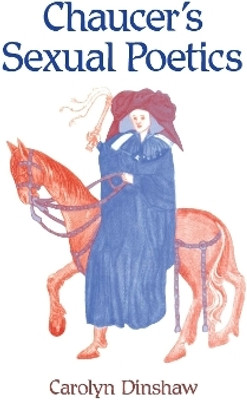
Chaucer's Sexual Poetics(English, Paperback, Dinshaw Carolyn)
- Dinshaw Carolyn
Paperback & Hardcover deals ―
Amazon IndiaGOFlipkart ₹ 1998SnapdealGOSapnaOnlineGOJain Book AgencyGOBooks Wagon₹364Book ChorGOCrosswordGODC BooksGOe-book & Audiobook deals ―
Amazon India GOGoogle Play Books GOAudible GO* Price may vary from time to time.
* GO = We're not able to fetch the price (please check manually visiting the website).
Know about the book -
Chaucer's Sexual Poetics(English, Paperback, Dinshaw Carolyn) is written by Dinshaw Carolyn and published by University of Wisconsin Press. It's available with International Standard Book Number or ISBN identification 0299122743 (ISBN 10) and 9780299122744 (ISBN 13).
In Chaucer's texts amatory acts are often correlated with literary acts; for him, literary activity is always a gendered activity. Writing in the context of a resolutely patriarchal culture, Chaucer's acts of interpretation are masculine activities. Carolyn Dinshaw's work is based on the idea that gendered relations such as courtship, marriage and betrayal do not simply provide plot elements in Chaucer's work but are in fact central to an understanding of Chaucer's poetics. In her readings of Chaucer's texts, Dinshaw argues that he demonstrates both his investment in patriarchal discourse and his awareness of its limitations. Dinshaw traces Chaucer's explorations of writing and gender in his major works. In ""Troilus and Criseyde"" and the ""Legend of Good Women"" Chaucer creates an emphatically masculine narrator who atttempts to control - and finally rejects - the unruly feminine in all its textual forms: he rejects both earthly love and the ""carnal"" letter of the pagan text. In ""The Canterbury Tales"", the Man of Law also tries to control the feminine, whch emerges in the contradictions and problematic gaps that open up in his narrative. The Wife of Bath, who responds energetically to the Man of Law's performance, represents everything the Man of Law tries to suppress. The Clerk, and finally the Pardoner, point toward a profound critique of a patriarchal hermeneutic model, especially of its gender distinctions. In bringing together modern theory and a medieval writer, Dinshaw demonstrates the existence of a long tradition of patriarchal thinking - and a long tradition of feminist critique.
