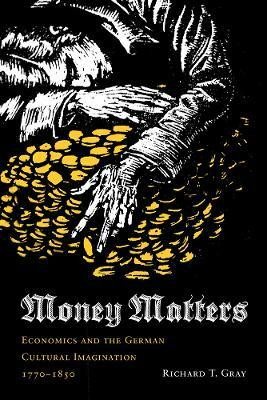
Money Matters(English, Hardcover, Gray Richard T.)
- Gray Richard T.
Paperback & Hardcover deals ―
Amazon IndiaGOFlipkart ₹ 10552SnapdealGOSapnaOnlineGOJain Book AgencyGOBooks Wagon₹291Book ChorGOCrosswordGODC BooksGOe-book & Audiobook deals ―
Amazon India GOGoogle Play Books GOAudible GO* Price may vary from time to time.
* GO = We're not able to fetch the price (please check manually visiting the website).
Know about the book -
Money Matters(English, Hardcover, Gray Richard T.) is written by Gray Richard T. and published by University of Washington Press. It's available with International Standard Book Number or ISBN identification 0295988363 (ISBN 10) and 9780295988368 (ISBN 13).
In Money Matters, Richard Gray investigates the discourses of aesthetics and philosophy alongside economic thought, arguing that their domains are not mutually exclusive. The transition in Germany from an agrarian or proto-industrial economy to a capitalist industrial economy, which was paralleled by a shift from the exchange of money in coin to the use of paper currencies, occurred simultaneously with an efflorescence of German-language literature and philosophy. Based on close readings of canonical literary and philosophical texts, Gray explores how this confluence led to a rich cross-fertilization between economic and literary thought in Germany during this period. Money Matters documents the surprising degree to which literature and philosophy participated in the creation of modern economic paradigms, as well as the extent to which economics influenced literature and philosophy. The cultural artifacts of the period demonstrate the existence of an "economic unconsciousness": persistent notions of value and exchange that inflect the aesthetic and thematic dimensions of literary and philosophical texts. This book offers a thought-provoking and original analysis of literature and ideas in the critical transition period from Kant and Goethe, through the German Romantics, to Marx.
