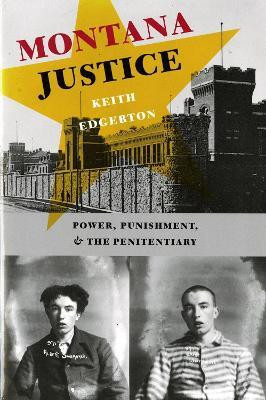
Montana Justice(English, Paperback, Edgerton Keith)
- Edgerton Keith
Paperback & Hardcover deals ―
Amazon IndiaGOFlipkart ₹ 3224SnapdealGOSapnaOnlineGOJain Book AgencyGOBooks Wagon₹95Book ChorGOCrosswordGODC BooksGOe-book & Audiobook deals ―
Amazon India GOGoogle Play Books GOAudible GO* Price may vary from time to time.
* GO = We're not able to fetch the price (please check manually visiting the website).
Know about the book -
Montana Justice(English, Paperback, Edgerton Keith) is written by Edgerton Keith and published by University of Washington Press. It's available with International Standard Book Number or ISBN identification 0295984430 (ISBN 10) and 9780295984438 (ISBN 13).
Since the days of the wild West, Montanans have struggled to be "tough on crime" with limited resources. During Montana's early territorial years, "criminal justice" was almost nonexistent: a few towns had inadequate and chronically overcrowded jails; occasional prisoners were sent east to the federal penitentiary in Detroit; and vigilantes summarily dealt with others suspected of crimes. In 1871, the federal government funded a penitentiary in Deer Lodge that was turned over to Montana when it achieved statehood in 1889. In this absorbing book, Keith Edgerton provides a social history of the Montana Penitentiary, with a primary focus on its early, formative years. After statehood, Montana leased its penitentiary to contractors, who utilized cheap inmate labor to turn a profit for themselves and for the state. Warden Frank Conley became a regional political boss and amassed a personal fortune, using inmates for road construction and a variety of public and private projects. Eventually, charges of corruption led to his ouster by Governor Joseph M. Dixon and sparked a trial and heated controversy that resulted in Dixon's political downfall. After 1921 the prison system came under full control of the state government. Although there were changes at the penitentiary during the rest of the twentieth century--and two full-scale riots in the 1950s--there was also a depressing repetition of corruption, neglect, and underfunding.
