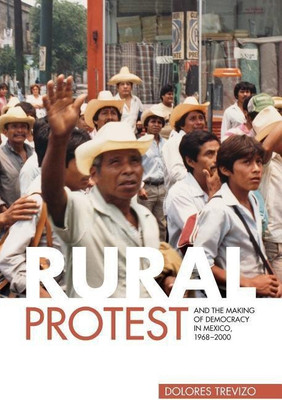
Rural Protest and the Making of Democracy in Mexico, 1968-2000(English, Paperback, Trevizo Dolores)
- Trevizo Dolores
Paperback & Hardcover deals ―
Amazon IndiaGOFlipkart ₹ 4701SnapdealGOSapnaOnlineGOJain Book AgencyGOBooks Wagon₹425Book ChorGOCrosswordGODC BooksGOe-book & Audiobook deals ―
Amazon India GOGoogle Play Books GOAudible GO* Price may vary from time to time.
* GO = We're not able to fetch the price (please check manually visiting the website).
Know about the book -
Rural Protest and the Making of Democracy in Mexico, 1968-2000(English, Paperback, Trevizo Dolores) is written by Trevizo Dolores and published by Pennsylvania State University Press. It's available with International Standard Book Number or ISBN identification 0271037881 (ISBN 10) and 9780271037882 (ISBN 13).
When the PRI fell from power in the elections of 2000, scholars looked for an explanation. Some focused on international pressures, while others pointed to recent electoral reforms. In contrast, Dolores Trevizo argues that a more complete explanation takes much earlier democratizing changes in civil society into account. Her book explores how largely rural protest movements laid the groundwork for liberalization of the electoral arena and the consolidation of support for two opposition parties, the PAN on the right and the PRD on the left, that eventually mounted a serious challenge to the PRI. She shows how youth radicalized by the 1968 showdown between the state and students in Mexico City joined forces with peasant militants in nonviolent rural protest to help bring about needed reform in the political system. In response to this political effervescence in the countryside, agribusinessmen organized in peak associations that functioned like a radical social movement. Their countermovement formulated the ideology of neoliberalism, and they were ultimately successful in mobilizing support for the PAN. Together, social movements and the opposition parties nurtured by them contributed to Mexico's transformation from a one-party state into a real electoral democracy nearly a hundred years after the Revolution.
