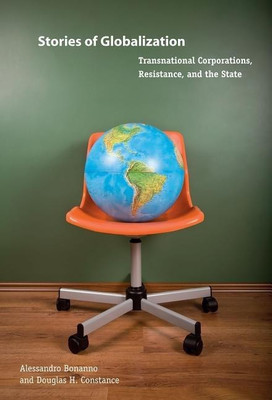
Stories of Globalization(English, Paperback, Bonanno Alessandro)
- Bonanno Alessandro
Paperback & Hardcover deals ―
Amazon IndiaGOFlipkart ₹ 4064SnapdealGOSapnaOnlineGOJain Book AgencyGOBooks Wagon₹354Book ChorGOCrosswordGODC BooksGOe-book & Audiobook deals ―
Amazon India GOGoogle Play Books GOAudible GO* Price may vary from time to time.
* GO = We're not able to fetch the price (please check manually visiting the website).
Know about the book -
Stories of Globalization(English, Paperback, Bonanno Alessandro) is written by Bonanno Alessandro and published by Pennsylvania State University Press. It's available with International Standard Book Number or ISBN identification 0271033894 (ISBN 10) and 9780271033891 (ISBN 13).
The economic and social outcomes of mid-twentieth-century Fordist capitalism were characterized by a decrease in the significance of distance and a shift in the dynamic of time. This "time-space compression" is one of the defining components of contemporary globalization. In their latest collaboration, Alessandro Bonanno and Douglas Constance provide an in-depth analysis of the origins and nature of globalization using the context of the agro-food sector, one of the most globalized socioeconomic sectors in the world. Breaking from widely used methodologies in the study of globalization, Bonanno and Constance argue that the shifting dynamic of space and time has created a new capitalism that is qualitatively different from capitalism inspired by patterns of international relations established throughout the nineteenth and early twentieth centuries. The book provides an extensive and original review of existing literature and is centered on eight specific case studies. Through the analysis of these "stories of globalization," the authors examine how the origins of and interactions between transnational corporations, groups that resist these organizations, and the state have given birth to a contemporary understanding of globalization. They use this new understanding to analyze globalization as a contested terrain in which the power of transnational corporations is affected by mounting opposition and internal contradictions.
