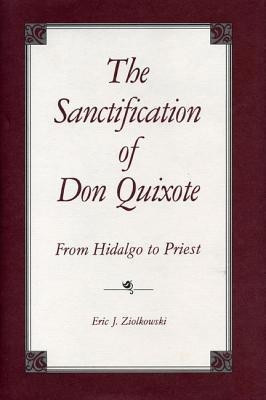
The Sanctification of Don Quixote(English, Paperback, unknown)
- unknown
Paperback & Hardcover deals ―
Amazon IndiaGOFlipkart ₹ 4043SnapdealGOSapnaOnlineGOJain Book AgencyGOBooks Wagon₹1,153Book ChorGOCrosswordGODC BooksGOe-book & Audiobook deals ―
Amazon India GOGoogle Play Books GOAudible GO* Price may vary from time to time.
* GO = We're not able to fetch the price (please check manually visiting the website).
Know about the book -
The Sanctification of Don Quixote(English, Paperback, unknown) is written by unknown and published by Pennsylvania State University Press. It's available with International Standard Book Number or ISBN identification 0271033657 (ISBN 10) and 9780271033655 (ISBN 13).
Ziolkowski explores the religious implications of the figure of Don Quixote in Western literature from Cervantes to the present.While scholars and critics in the past have often called attention to the secularizing tendency of modern literature, to the numerous fictional adaptations of the Christ figure on the one hand, and the innumerable literary descendants of Don Quixote on the other, this study is the first to examine a lineage of characters in whom the images of the alleged savior and the mad knight are combined.After considering Don Quixote as the first modern novel, and taking into account its relationship to religion, society, and censorship in seventeenth-century Spain, Ziolkowski traces the history and fate of Don Quixote, the character, through a series of religious transformations over the centuries, focusing on three novels that adapt the Quixote figure: Henry Fielding's Joseph Andrews, Fyodor Dostoevsky's The Idiot, and Graham Greene's Monsignor Quixote. Ziolkowski argues that, given the increased secularization and decline of religious consciousness over the last several centuries, any pursuit of religious values or ideas becomes questionable and this appears "quixotic" insofar as it stands in contradiction to the sociohistorical context. He concludes that religious existence, for the few who pursue it in suffering, which means that the religious person feels temporally displaced for adhering to a seemingly obsolete faith and lifestyle.
