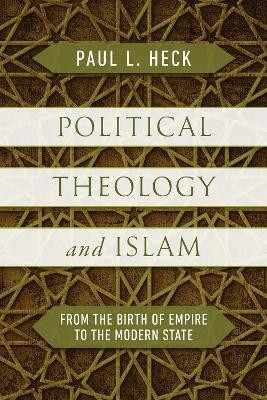
Political Theology and Islam(English, Hardcover, Heck Paul L.)
- Heck Paul L.
Paperback & Hardcover deals ―
Amazon IndiaGOFlipkart ₹ 8117SnapdealGOSapnaOnlineGOJain Book AgencyGOBooks Wagon₹413Book ChorGOCrosswordGODC BooksGOe-book & Audiobook deals ―
Amazon India GOGoogle Play Books GOAudible GO* Price may vary from time to time.
* GO = We're not able to fetch the price (please check manually visiting the website).
Know about the book -
Political Theology and Islam(English, Hardcover, Heck Paul L.) is written by Heck Paul L. and published by University of Notre Dame Press. It's available with International Standard Book Number or ISBN identification 0268207356 (ISBN 10) and 9780268207359 (ISBN 13).
Paul L. Heck's Political Theology and Islam offers a sophisticated and comprehensive analysis of sovereignty in Islamic society, beginning with the origins of Islam and extending to the present. This wide-ranging study sets out to answer an unassumingly tricky question: What is politics in Islam? Paul L. Heck's answer takes the form of a close analysis of sovereignty across Islamic history, approaching this concept from the perspective of political theology. As he illustrates, the history of politics in Islam is best understood as an ongoing struggle for a moral order between those who occupy positions of rulership and religious voices that communicate the ethics of Islam and educate the public in their religious and moral devotions. In this sense, sovereignty in Islam is split between ruling powers and pious communities, whose interactions range from close cooperation to outright competition. Heck shows that it is precisely through these interactions that Islamic conceptions of sovereignty are constructed and negotiated. Political Theology and Islam's first section spells out the concepts and methods for the study of politics in Islam as a struggle for a moral order, one not only involving varied claims to sovereignty but also a general determination to realize the righteousness of Islam that stands at the heart of the message that the Prophet Muhammad conveyed to his society in seventh-century Arabia. The following sections demonstrate, through examples from both the past and today's worldwide Muslim community, the diverse ways in which the umma, the community of Muslims, has struggled for a moral order that recalls its prophetic message. Deftly moving in various political theaters and through a wide range of intellectual traditions, Heck's book will emerge as a touchstone of scholarship in the field of Muslim politics and intellectual thought.
