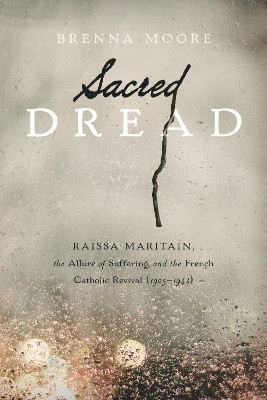
Sacred Dread(English, Paperback, Moore Brenna)
- Moore Brenna
Paperback & Hardcover deals ―
Amazon IndiaGOFlipkart ₹ 3324SnapdealGOSapnaOnlineGOJain Book AgencyGOBooks Wagon₹175Book ChorGOCrosswordGODC BooksGOe-book & Audiobook deals ―
Amazon India GOGoogle Play Books GOAudible GO* Price may vary from time to time.
* GO = We're not able to fetch the price (please check manually visiting the website).
Know about the book -
Sacred Dread(English, Paperback, Moore Brenna) is written by Moore Brenna and published by University of Notre Dame Press. It's available with International Standard Book Number or ISBN identification 0268035296 (ISBN 10) and 9780268035297 (ISBN 13).
In early twentieth-century France, a vast network of artists, writers, and religious seekers were drawn to Roman Catholicism's elaborate panoply of symbols centered on suffering. A preoccupation with affliction dominated the movement now known as the French Catholic revival, or the renouveau catholique-considered a watershed in the history of the modern Catholic Church and the "golden age" of French Catholicism. In Sacred Dread, Brenna Moore examines the life and writings of Raissa Maritain (1883-1960), one of the few women to contribute to this intellectual movement. Moore explores the reasons why Maritain, a nonpracticing Jew, was attracted to this suffering-centered theological imagination and how she and other advocates transformed it in the wake of the Holocaust. Sacred Dread offers readers a new understanding of a radical Catholic piety that was embraced by a wide range of pre-war intellectuals. By combining late-modern French intellectual and cultural history, Catholic theology, biography, and an analysis of Maritain's published and unpublished writings, Moore also identifies two major factors in this Catholic revival-gender and Judaism-that have not received adequate attention. Discourses of femininity and Judaism were central to the French Catholic articulation and idealization of suffering. Moore argues that Maritain, as a Jewish convert and one of the few women in this intellectual community, embodied symbolic associations of suffering, holiness, women, and Jews; indeed, for her husband, godfather, confessors, friends, and godchildren, Raissa Maritain was herself the articulation of this abject ideal. Caught as she was in a web of meaning, Raissa Maritain was an intellectual whose legacy deepens but also subverts the centrality of femininity and Judaism in French Catholic elaborations of suffering.
