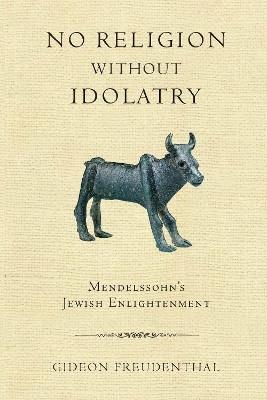
No Religion Without Idolatry(English, Paperback, Freudenthal Gideon)
- Freudenthal Gideon
Paperback & Hardcover deals ―
Amazon IndiaGOFlipkart ₹ 3936SnapdealGOSapnaOnlineGOJain Book AgencyGOBooks Wagon₹236Book ChorGOCrosswordGODC BooksGOe-book & Audiobook deals ―
Amazon India GOGoogle Play Books GOAudible GO* Price may vary from time to time.
* GO = We're not able to fetch the price (please check manually visiting the website).
Know about the book -
No Religion Without Idolatry(English, Paperback, Freudenthal Gideon) is written by Freudenthal Gideon and published by University of Notre Dame Press. It's available with International Standard Book Number or ISBN identification 0268028907 (ISBN 10) and 9780268028909 (ISBN 13).
Moses Mendelssohn (1725-1786) is considered the foremost representative of Jewish Enlightenment. In No Religion without Idolatry, Gideon Freudenthal offers a novel interpretation of Mendelssohn's general philosophy and discusses for the first time Mendelssohn's semiotic interpretation of idolatry in his Jerusalem and in his Hebrew biblical commentary. Mendelssohn emerges from this study as an original philosopher, not a shallow popularizer of rationalist metaphysics, as he is sometimes portrayed. Of special and lasting value is his semiotic theory of idolatry. From a semiotic perspective, both idolatry and enlightenment are necessary constituents of religion. Idolatry ascribes to religious symbols an intrinsic value: enlightenment maintains that symbols are conventional and merely signify religious content but do not share its properties and value. Without enlightenment, religion degenerates to fetishism; without idolatry it turns into philosophy and frustrates religious experience. Freudenthal demonstrates that in Mendelssohn's view, Judaism is the optimal religious synthesis. It consists of transient ceremonies of a "living script." Its ceremonies are symbols, but they are not permanent objects that could be venerated. Jewish ceremonies thus provide a religious experience but frustrate fetishism. Throughout the book, Freudenthal fruitfully contrasts Mendelssohn's views on religion and philosophy with those of his contemporary critic and opponent, Salomon Maimon. No Religion without Idolatry breaks new ground in Mendelssohn studies. It will interest students and scholars in philosophy of religion, Judaism, and semiotics.
