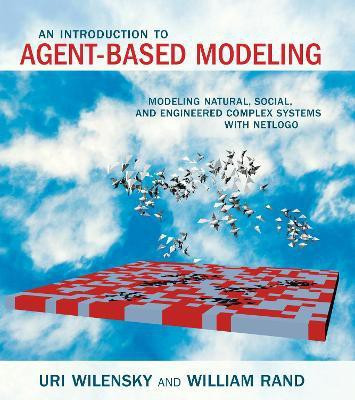
An Introduction to Agent-Based Modeling(English, Paperback, Wilensky Uri)
- Wilensky Uri
Paperback & Hardcover deals ―
Amazon IndiaGOFlipkart ₹ 6881SnapdealGOSapnaOnlineGOJain Book AgencyGOBooks Wagon₹144Book ChorGOCrosswordGODC BooksGOe-book & Audiobook deals ―
Amazon India GOGoogle Play Books GOAudible GO* Price may vary from time to time.
* GO = We're not able to fetch the price (please check manually visiting the website).
Know about the book -
An Introduction to Agent-Based Modeling(English, Paperback, Wilensky Uri) is written by Wilensky Uri and published by MIT Press Ltd. It's available with International Standard Book Number or ISBN identification 0262731894 (ISBN 10) and 9780262731898 (ISBN 13).
A comprehensive and hands-on introduction to the core concepts, methods, and applications of agent-based modeling, including detailed NetLogo examples. The advent of widespread fast computing has enabled us to work on more complex problems and to build and analyze more complex models. This book provides an introduction to one of the primary methodologies for research in this new field of knowledge. Agent-based modeling (ABM) offers a new way of doing science: by conducting computer-based experiments. ABM is applicable to complex systems embedded in natural, social, and engineered contexts, across domains that range from engineering to ecology. An Introduction to Agent-Based Modeling offers a comprehensive description of the core concepts, methods, and applications of ABM. Its hands-on approach-with hundreds of examples and exercises using NetLogo-enables readers to begin constructing models immediately, regardless of experience or discipline. The book first describes the nature and rationale of agent-based modeling, then presents the methodology for designing and building ABMs, and finally discusses how to utilize ABMs to answer complex questions. Features in each chapter include step-by-step guides to developing models in the main text; text boxes with additional information and concepts; end-of-chapter explorations; and references and lists of relevant reading. There is also an accompanying website with all the models and code.
