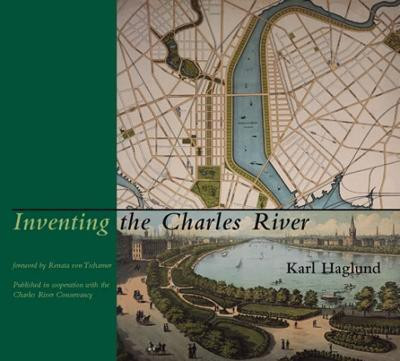
Inventing the Charles River(English, Hardcover, Haglund Karl)
- Haglund Karl
Paperback & Hardcover deals ―
Amazon IndiaGOFlipkart ₹ 4397SnapdealGOSapnaOnlineGOJain Book AgencyGOBooks Wagon₹3,727Book ChorGOCrosswordGODC BooksGOe-book & Audiobook deals ―
Amazon India GOGoogle Play Books GOAudible GO* Price may vary from time to time.
* GO = We're not able to fetch the price (please check manually visiting the website).
Know about the book -
Inventing the Charles River(English, Hardcover, Haglund Karl) is written by Haglund Karl and published by MIT Press Ltd. It's available with International Standard Book Number or ISBN identification 0262083078 (ISBN 10) and 9780262083072 (ISBN 13).
An illustrated account of the creation of the Charles River Basin, focusing on the precarious balance between transportation planning and the stewardship of the public realm. The Charles River Basin, extending nine miles upstream from the harbor, has been called Boston's "Central Park." Yet few realize that this apparently natural landscape is a totally fabricated public space. Two hundred years ago the Charles was a tidal river, edged by hundreds of acres of salt marshes and mudflats. Inventing the Charles River describes how, before the creation of the basin could begin, the river first had to be imagined as a single public space. The new esplanades along the river changed the way Bostonians perceived their city; and the basin, with its expansive views of Boston and Cambridge, became an iconic image of the metropolis. The book focuses on the precarious balance between transportation planning and stewardship of the public realm. Long before the esplanades were realized, great swaths of the river were given over to industrial enterprises and transportation-millponds, bridges, landfills, and a complex network of road and railway bridges. In 1929, Boston's first major highway controversy erupted when a four-lane road was proposed as part of a new esplanade. At twenty-year intervals, three riverfront road disputes followed, successively more complex and disputatious, culminating in the lawsuits over "Scheme Z," the Big Dig's plan for eighteen lanes of highway ramps and bridges over the river. More than four hundred photographs, maps, and drawings illustrate past and future visions for the Charles and document the river's place in Boston's history.
