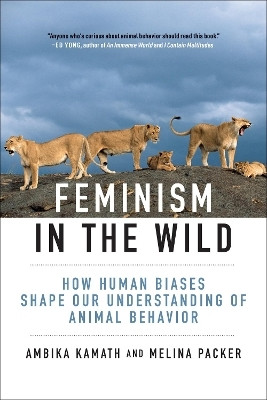
Feminism in the Wild(English, Paperback, Kamath Ambika)
- Kamath Ambika
Paperback & Hardcover deals ―
Amazon IndiaGOFlipkart ₹ 2033SnapdealGOSapnaOnlineGOJain Book AgencyGOBooks Wagon₹689Book ChorGOCrosswordGODC BooksGOe-book & Audiobook deals ―
Amazon India GOGoogle Play Books GOAudible GO* Price may vary from time to time.
* GO = We're not able to fetch the price (please check manually visiting the website).
Know about the book -
Feminism in the Wild(English, Paperback, Kamath Ambika) is written by Kamath Ambika and published by MIT Press Ltd. It's available with International Standard Book Number or ISBN identification 0262049635 (ISBN 10) and 9780262049634 (ISBN 13).
How dominant culture from sexism and homophobia to racism, capitalism, ableism, and more has limited the science of animal behavior, and how we can free ourselves from these limited perspectives. In Feminism in the Wild, Ambika Kamath and Melina Packer reveal how scientists studying animal behavior have long projected human norms and values onto animals while seeking to understand them. When scientific studies conclude that these norms and values are natural in animals, it makes it easier to think of them as natural in humans too. And because scientists, historically and to this day, largely belong to elite, powerful segments of society, the norms and values embedded into animal behavior science match those of the already powerful. How can animal behavior science escape this trap of naturalizing dominant culture? Drawing from decades of feminist, antiracist, queer, disability justice, and Marxist contributions including those of biologists Kamath and Packer break down persistent assumptions in the status quo of animal behavior science and offer a multitude of alternative approaches. Core concepts in animal behavior science and evolutionary biology from sex categories and sexual selection to fitness, adaptation, biological determinism and more are carefully contextualized and critically reexamined. This unique collaboration between an animal behavior scientist and a feminist science studies scholar is an illuminating and hopeful read for anyone who is curious about how animals behave, and anyone who wants to break free from scientific approaches that perpetuate systems of oppression.
