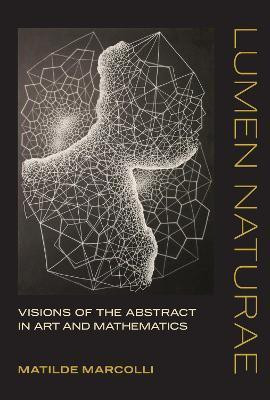
Lumen Naturae(English, Hardcover, Marcolli Matilde)
- Marcolli Matilde
Paperback & Hardcover deals ―
Amazon IndiaGOFlipkart ₹ 3400SnapdealGOSapnaOnlineGOJain Book AgencyGOBooks Wagon₹2,805Book ChorGOCrosswordGODC BooksGOe-book & Audiobook deals ―
Amazon India GOGoogle Play Books GOAudible GO* Price may vary from time to time.
* GO = We're not able to fetch the price (please check manually visiting the website).
Know about the book -
Lumen Naturae(English, Hardcover, Marcolli Matilde) is written by Marcolli Matilde and published by MIT Press Ltd. It's available with International Standard Book Number or ISBN identification 0262043904 (ISBN 10) and 9780262043908 (ISBN 13).
Exploring common themes in modern art, mathematics, and science, including the concept of space, the notion of randomness, and the shape of the cosmos. This is a book about art-and a book about mathematics and physics. In Lumen Naturae (the title refers to a purely immanent, non-supernatural form of enlightenment), mathematical physicist Matilde Marcolli explores common themes in modern art and modern science-the concept of space, the notion of randomness, the shape of the cosmos, and other puzzles of the universe-while mapping convergences with the work of such artists as Paul Cezanne, Mark Rothko, Sol LeWitt, and Lee Krasner. Her account, focusing on questions she has investigated in her own scientific work, is illustrated by more than two hundred color images of artworks by modern and contemporary artists. Thus Marcolli finds in still life paintings broad and deep philosophical reflections on space and time, and connects notions of space in mathematics to works by Paul Klee, Salvador Dali, and others. She considers the relation of entropy and art and how notions of entropy have been expressed by such artists as Hans Arp and Fernand Leger; and traces the evolution of randomness as a mode of artistic expression. She analyzes the relation between graphical illustration and scientific text, and offers her own watercolor-decorated mathematical notebooks. Throughout, she balances discussions of science with explorations of art, using one to inform the other. (She employs some formal notation, which can easily be skipped by general readers.) Marcolli is not simply explaining art to scientists and science to artists; she charts unexpected interdependencies that illuminate the universe.
