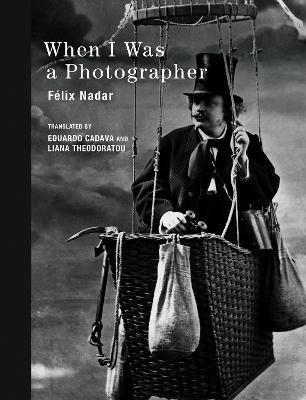
When I Was a Photographer(English, Hardcover, Nadar Felix)
- Nadar Felix
Paperback & Hardcover deals ―
Amazon IndiaGOFlipkart ₹ 2084SnapdealGOSapnaOnlineGOJain Book AgencyGOBooks Wagon₹2,519Book ChorGOCrosswordGODC BooksGOe-book & Audiobook deals ―
Amazon India GOGoogle Play Books GOAudible GO* Price may vary from time to time.
* GO = We're not able to fetch the price (please check manually visiting the website).
Know about the book -
When I Was a Photographer(English, Hardcover, Nadar Felix) is written by Nadar Felix and published by MIT Press Ltd. It's available with International Standard Book Number or ISBN identification 0262029456 (ISBN 10) and 9780262029452 (ISBN 13).
The first complete English translation of Nadar's intelligent and witty memoir, a series of vignettes that capture his experiences in the early days of photography. Celebrated nineteenth-century photographer-and writer, actor, caricaturist, inventor, and balloonist-Felix Nadar published this memoir of his photographic life in 1900 at the age of eighty. Composed as a series of vignettes (we might view them as a series of "written photographs"), this intelligent and witty book offers stories of Nadar's experiences in the early years of photography, memorable character sketches, and meditations on history. It is a classic work, cited by writers from Walter Benjamin to Rosalind Krauss. This is its first and only complete English translation. In When I Was a Photographer (Quand j'etais photographe), Nadar tells us about his descent into the sewers and catacombs of Paris, where he experimented with the use of artificial lighting, and his ascent into the skies over Paris in a hot air balloon, from which he took the first aerial photographs. He recounts his "postal photography" during the 1870-1871 Siege of Paris-an amazing scheme involving micrographic images and carrier pigeons. He describes technical innovations and important figures in photography, and offers a thoughtful consideration of society and culture; but he also writes entertainingly about such matters as Balzac's terror of being photographed, the impact of a photograph on a celebrated murder case, and the difference between male and female clients. Nadar's memoir captures, as surely as his photographs, traces of a vanished era.
