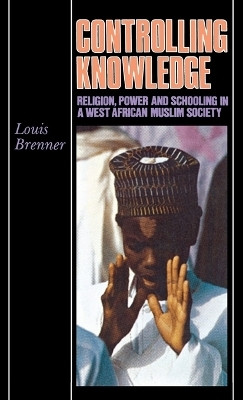
Controlling Knowledge(English, Hardcover, Brenner Louis)
- Brenner Louis
Paperback & Hardcover deals ―
Amazon IndiaGOFlipkart ₹ 4126SnapdealGOSapnaOnlineGOJain Book AgencyGOBooks Wagon₹150Book ChorGOCrosswordGODC BooksGOe-book & Audiobook deals ―
Amazon India GOGoogle Play Books GOAudible GO* Price may vary from time to time.
* GO = We're not able to fetch the price (please check manually visiting the website).
Know about the book -
Controlling Knowledge(English, Hardcover, Brenner Louis) is written by Brenner Louis and published by Indiana University Press. It's available with International Standard Book Number or ISBN identification 0253339170 (ISBN 10) and 9780253339171 (ISBN 13).
"I know of no one who has taken such an ambitious swath of time and done such a good job of showing the continuity and change across those one hundred years. . . . a splendid achievement, the result of decades of research and reflection." -David Robinson Controlling Knowledge examines the history of West African Muslim society in the Republic of Mali, formerly the Soudan Francais, in the 20th century. Focusing on the transformation of Muslim institutions-especially modernized Muslim schools (medersas) and voluntary organizations-over the past hundred years, Louis Brenner uncovers the social and political processes that have produced new forms, definitions, and expressions of Islam that are patently different from those that prevailed a century earlier. Brenner's study shows that Muslim society in Mali is religiously pluralistic and that it has developed different ways of relating religious obligations to prevailing social and political conditions. Although they were heavily influenced by French and Middle Eastern models, Brenner demonstrates that it was in opposition to French colonial authority that the first medersas and voluntary associations appeared. The complex array of power relations within which these institutions evolved, under French colonial rule and in the postcolonial secularist state, is revealed in this thoughtful book. Controlling Knowledge makes a major contribution to our understanding of Muslim history in Mali and West Africa, both in recent decades and over the long term.
