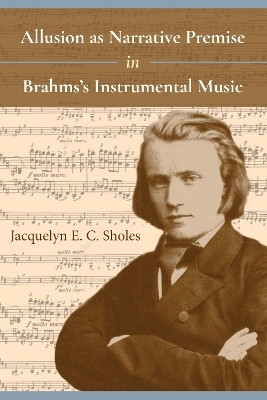
Allusion As Narrative Premise in Brahms's Instrumental Music(English, Electronic book text, Sholes Jacquelyn E. C.)
- Sholes Jacquelyn E. C.
Paperback & Hardcover deals ―
Amazon IndiaGOFlipkart ₹ 3410SnapdealGOSapnaOnlineGOJain Book AgencyGOBooks Wagon₹2,799Book ChorGOCrosswordGODC BooksGOe-book & Audiobook deals ―
Amazon India GOGoogle Play Books GOAudible GO* Price may vary from time to time.
* GO = We're not able to fetch the price (please check manually visiting the website).
Know about the book -
Allusion As Narrative Premise in Brahms's Instrumental Music(English, Electronic book text, Sholes Jacquelyn E. C.) is written by Sholes Jacquelyn E. C. and published by Indiana University Press. It's available with International Standard Book Number or ISBN identification 0253033160 (ISBN 10) and 9780253033161 (ISBN 13).
Who inspired Johannes Brahms in his art of writing music? In this book, Jacquelyn E. C. Sholes provides a fresh look at the ways in which Brahms employed musical references to works of earlier composers in his own instrumental music. By analyzing newly identified allusions alongside previously known musical references in works such as the B-Major Piano Trio, the D-Major Serenade, the First Piano Concerto, and the Fourth Symphony, among others, Sholes demonstrates how a historical reference in one movement of a work seems to resonate meaningfully, musically, and dramatically with material in other movements in ways not previously recognized. She highlights Brahms's ability to weave such references into broad, movement-spanning narratives, arguing that these narratives served as expressive outlets for his complicated, sometimes conflicted, attitudes toward the material to which he alludes. Ultimately, Brahms's music reveals both the inspiration and the burden that established masters such as Domenico Scarlatti, J. S. Bach, Haydn, Mozart, Schubert, Schumann, Wagner, and especially Beethoven represented for him as he struggled to emerge with his own artistic voice and to define and secure his unique position in music history.
